Musizi (Maesopsis eminii): Uganda's Fast Indigenous Timber Tree
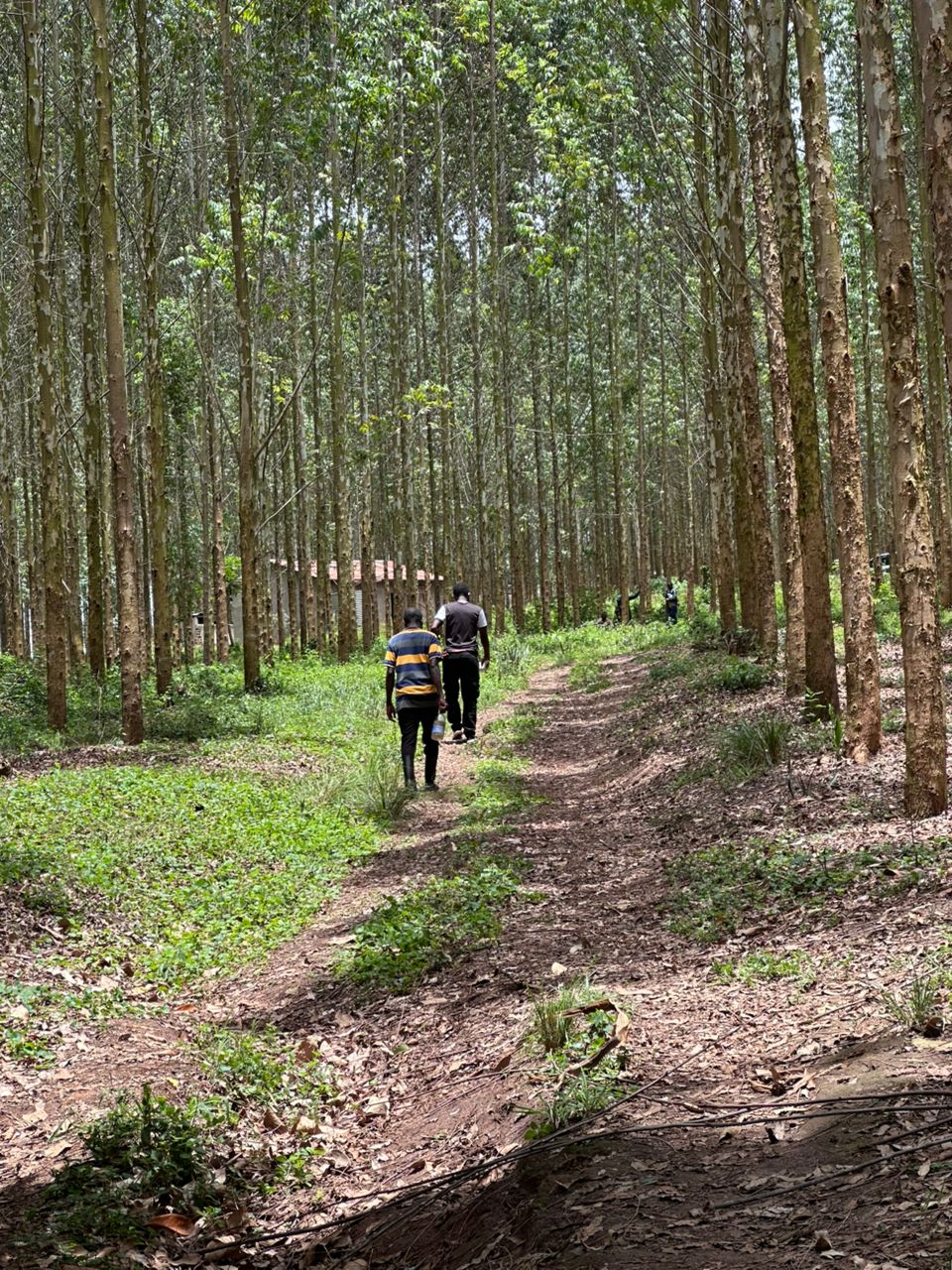
Musizi is Maesopsis eminii — an indigenous East African tree and the fastest-growing indigenous timber species commonly planted in Uganda. The Luganda name is what it is traded under in English too.
It reaches sawlog size in roughly 15–20 years — far slower than eucalyptus poles, far faster than mahogany or muvule. The timber is light-to-medium, used for plywood, light construction, boxes and joinery.
Its strongest position in Uganda is as the middle option: an indigenous species with a commercially tolerable rotation, and an excellent agroforestry shade tree.
Free tool — no sign-up Compare musizi against eucalyptus Run both rotations with your own figures and see which pays better on your land.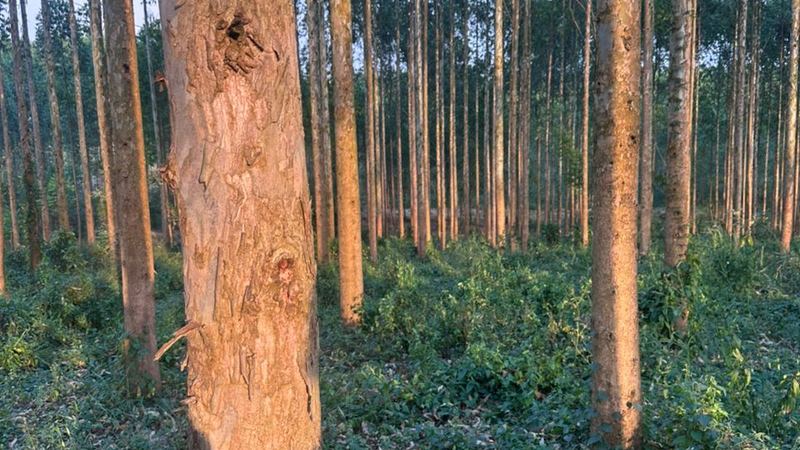
Growers usually arrive at musizi from one of two directions. Either they want to plant indigenous species but cannot accept a forty-year horizon, or they want shade over coffee and bananas that also produces timber. Musizi answers both, which is why it is one of the most widely planted indigenous trees in the Lake Victoria crescent.
Why Growers Choose Musizi
- Genuinely fast for an indigenous species. A light-demanding pioneer — it evolved to shoot up into gaps in natural forest, and it does the same on a plantation site.
- Straight, clean stems. It self-prunes reasonably well and produces usable clear bole length, which matters for sawn and peeled products.
- Established plywood demand. The timber peels and is used in the region's plywood industry, giving it a market beyond local sawmilling.
- Excellent agroforestry shade. A relatively light, high canopy over coffee and banana — shade without shutting the crop down. See agroforestry in Uganda.
- It is indigenous. Which matters for ESG-conscious buyers, restoration programmes, carbon projects and community acceptance in a way that eucalyptus does not.
- Social licence. Nobody objects to musizi near a spring the way they object to eucalyptus.
Where It Grows Well
| Requirement | What musizi wants |
|---|---|
| Rainfall | Reliable and reasonably high — it is a moist-forest species, not a dryland one |
| Altitude | Low to mid; it does not suit the cold highlands |
| Soil | Deep, fertile, well-drained. It responds strongly to good ground and sulks on poor ground |
| Drainage | Must be free-draining. It does not tolerate waterlogging |
| Light | Full light. A pioneer — it will not develop under a closed canopy |
| Best Ugandan zones | Lake Victoria crescent (Wakiso, Mukono, Mpigi, Masaka), Bunyoro (Masindi, Hoima, Kibaale), parts of Busoga |
| Poor fit | Dry northern districts, highland Kabale and Kapchorwa, shallow or waterlogged soils |
The short version: musizi wants the same good ground that grows good coffee. If your site is marginal, this is not the species to rescue it with — look at pine or drought-tolerant eucalyptus instead.
Musizi rewards good sites and punishes poor ones. We assess before you order.
Establishing a Musizi Stand
| Objective | Spacing | Trees per acre | Notes |
|---|---|---|---|
| Timber block | 3m × 3m | 450 | Thin as the canopy closes to concentrate growth on the best stems |
| Timber, wider start | 4m × 4m | 253 | Less thinning needed; prune for clear bole |
| Agroforestry shade | 8–12m scattered | 30–60 | Over coffee or banana; prune to lift the canopy |
| Boundary planting | 4–5m in line | — | Marks the boundary and produces timber |
- Plant into established rains, as with everything else in Uganda. Two to three weeks of consistent rainfall first.
- Weed hard in years one and two. Musizi is light-demanding — grass competition hits it harder than it hits eucalyptus.
- Prune for a clear bole. The value is in clear, knot-free stem length. Prune lower branches progressively rather than all at once.
- Thin on time. A musizi block left unthinned produces the same disappointment as an unthinned pine block — uniformly thin stems that never reach sawlog grade.
- Protect from fire and browsing. Young musizi is palatable to livestock.
What Musizi Sells For
Musizi is priced as sawn or peeled timber by volume and grade, not per tree, and it sits above eucalyptus and below the premium hardwoods. The main outlets:
- Plywood mills — the timber peels, which gives it a market segment eucalyptus does not have
- Sawmills — light construction timber, shuttering, joinery
- Box and packaging — a steady, unglamorous, reliable market
- Local furniture — where a lighter, easily worked timber suits
The same rule applies as with every other species: measure before you market. An unmeasured block is priced defensively by buyers. See how to find and vet tree buyers and tree prices in Uganda.
The Honest Limitations
Four things sellers will not tell you
- It is not durable timber. Musizi is light-to-medium and not naturally durable. It is not a substitute for muvule or mahogany, and it needs treatment for exterior or ground-contact use.
- It demands a good site. On thin, dry or waterlogged ground it disappoints badly. Do not use it to rescue marginal land.
- It does not coppice like eucalyptus. Plan and budget for replanting after harvest — there is no free second rotation.
- It regenerates aggressively. Musizi seeds prolifically and is dispersed by birds and animals. It has become invasive in some East African forest environments outside its natural range. Do not plant it adjacent to intact natural forest without thinking carefully about that, and be prepared to manage volunteer seedlings.
That last point deserves emphasis because it is rarely mentioned. Musizi is a well-behaved plantation and farm tree on farmland. Next to a protected natural forest, its pioneering vigour is a liability rather than an asset. Site it accordingly.
Musizi vs Eucalyptus vs Mahogany
| Eucalyptus | Musizi | Muvule / Mahogany | |
|---|---|---|---|
| First harvest | 5–8 years | 15–20 years | 25–40+ years |
| Main product | Poles | Plywood, light timber | Premium furniture timber |
| Value per m³ | Lower | Middle | High |
| Coppices? | Yes — 2–3 rotations | No | No |
| Site demands | Moderate | High — wants good ground | High |
| Main pest risk | Gall wasp | Relatively few | Shoot borer — a serious constraint |
| Indigenous? | No | Yes | Yes |
| Social licence | Contested near water | Good | Excellent |
Many of the better-run holdings we advise plant more than one. A eucalyptus block for cash flow at year six, a musizi block maturing at year seventeen, and a small indigenous hardwood block as a long-horizon asset. If you have the acreage, that spread is worth modelling — see forest investment returns and the investment calculator.
Frequently Asked Questions
What is musizi in English?
Musizi is Maesopsis eminii, sometimes called the umbrella tree. In Uganda the Luganda name is the trade name and is used in English conversation too.
It is an indigenous East African timber species, and the fastest-growing indigenous tree commonly planted in Uganda.
How long does musizi take to mature?
Roughly 15 to 20 years to sawlog size on a good site — considerably slower than eucalyptus poles at five to eight years, but far faster than muvule or mahogany, which run to 25–40 years and beyond.
It is the practical middle option for growers who want an indigenous species without a generational horizon.
What is musizi timber used for?
Plywood is the main outlet — the timber peels well, which gives it a market segment eucalyptus does not have. Beyond that: light construction, shuttering, joinery, boxes and packaging, and local furniture.
It is light-to-medium and not naturally durable, so it is not a substitute for muvule or mahogany and needs treatment for exterior or ground-contact use.
Where does musizi grow best in Uganda?
The Lake Victoria crescent (Wakiso, Mukono, Mpigi, Masaka), Bunyoro (Masindi, Hoima, Kibaale) and parts of Busoga. It wants reliable rainfall, low to mid altitude, and deep, fertile, free-draining soil.
It is a poor fit for the dry northern districts, the cold highlands of Kabale and Kapchorwa, and any shallow or waterlogged site. In short: musizi wants the same good ground that grows good coffee.
Does musizi coppice like eucalyptus?
No. Musizi does not regrow reliably from cut stumps the way eucalyptus does, so you must replant and pay establishment costs again after harvest.
This is a material difference in the financial model and is often overlooked when the two are compared — eucalyptus typically gives two or three rotations from one planting.
Is musizi invasive?
It seeds prolifically and is dispersed by birds and animals, and it has become invasive in some East African forest environments outside its natural range.
On farmland and in plantation blocks it behaves well. Next to intact natural forest its pioneering vigour is a liability — think carefully before siting it there, and be prepared to manage volunteer seedlings.
How much is musizi worth per tree in Uganda?
Musizi is priced as sawn or peeled timber by volume and grade rather than per tree, and it sits above eucalyptus and below the premium hardwoods.
As with every species, an unmeasured block is priced defensively by buyers. Measure before you market — growers consistently find the inventory is recovered several times over in the improved offer.
Considering Musizi?
It suits some sites brilliantly and others not at all, and it is a fifteen-year decision. We assess the site before you order seedlings.
Over a decade establishing, measuring and managing eucalyptus, pine and indigenous plantations across Uganda. Based in Wakiso, Kampala. Reviewed and updated August 13, 2026.