Tree Buyers in Uganda: How to Find Them, Vet Them and Get a Fair Price
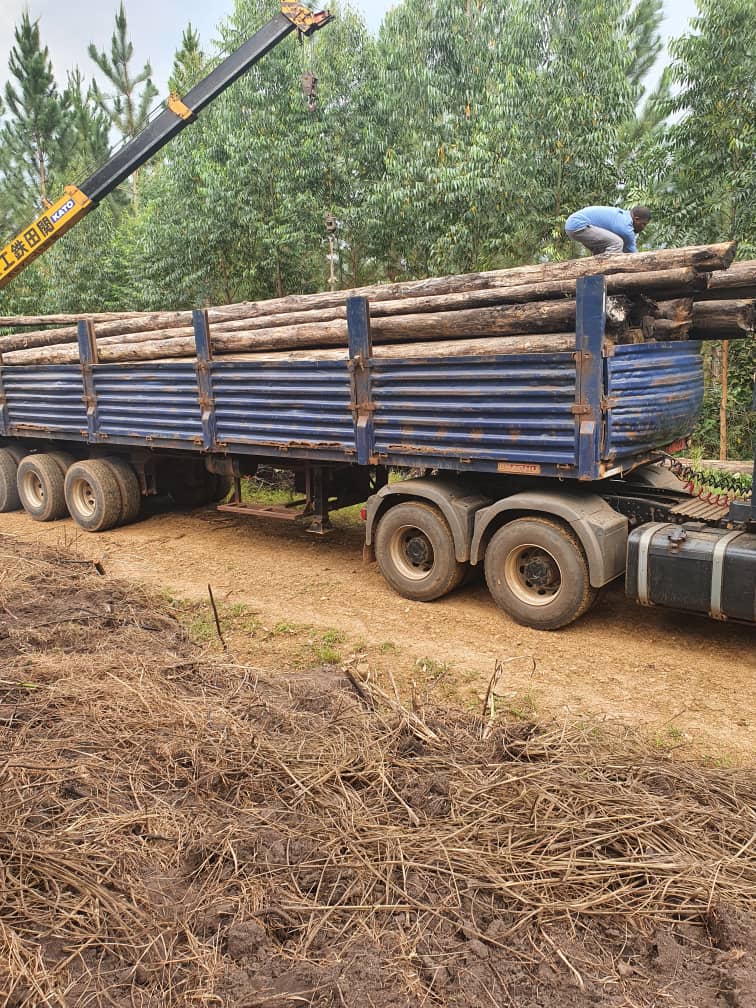
Trees in Uganda are bought by pole traders and treatment plants, sawmills, charcoal and firewood traders, construction contractors, and institutional buyers such as utilities and tea and sugar estates.
The two decisions that determine your price are: have the stand measured before you market it, and get offers from at least three buyers. One buyer sets a price. Three buyers discover one.
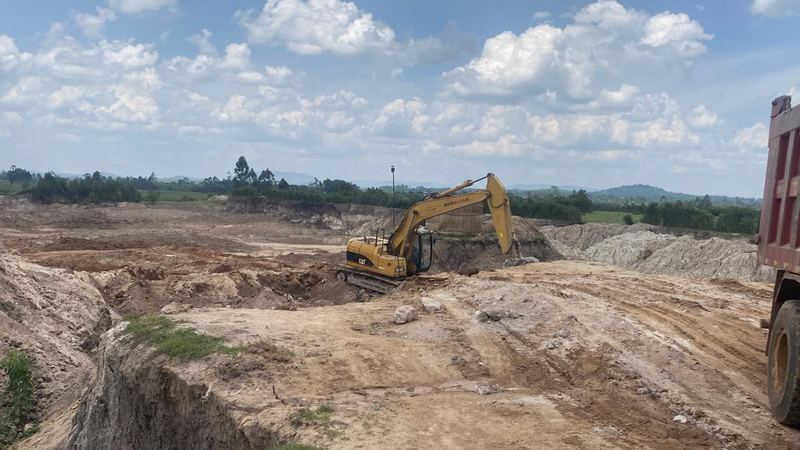
Most Ugandan growers meet the timber market exactly once per rotation, at the moment a buyer walks onto their land and makes an offer. The buyer does this every week. That asymmetry — not the quality of the trees — is what usually determines the price. This guide is about closing it.
Who Actually Buys Trees in Uganda
| Buyer type | What they want | How they pay | Notes |
|---|---|---|---|
| Pole traders | Straight eucalyptus at building and utility pole dimensions | Per pole by length and diameter grade | The largest market for smallholder eucalyptus in Uganda |
| Treatment plants | Poles meeting a specification for treatment | Per pole, graded to spec | Tighter specification, generally better prices for qualifying material |
| Sawmills | Pine and larger eucalyptus at sawlog diameter | Per cubic metre or per log by grade | Where mature pine goes; diameter is decisive |
| Charcoal & firewood traders | Volume and density; form is irrelevant | Per lorry load or per tonne | Outlet for thinnings, crooked stems and E. camaldulensis |
| Construction contractors | Scaffolding and formwork poles | Per pole, often bulk | Demand tracks the building cycle |
| Institutional buyers | Contracted volumes to specification | Contract terms | Utilities, estates and processors; usually want scale and paperwork |
Which of these you should be talking to is decided years earlier, by spacing and management. A block planted tight and never weeded produces thin, sweepy stems that only the charcoal trade wants. A well-spaced, weeded block produces pole-grade material with several competing outlets. See spacing and trees per acre for the decision that sets this up.
How to Find More Than One Buyer
The buyer who appears at your gate uninvited is, almost by definition, not the buyer offering the best price — they found you because you have not been looking. Practical ways to widen the field:
- Ask the district forestry office. They know who is operating legitimately in your area and who is not.
- Talk to growers who have recently sold. Neighbours two or three years ahead of you in the rotation are the single best source of real price information.
- Approach treatment plants and sawmills directly. Many prefer buying from growers to buying through intermediaries, and will quote if you can describe what you have credibly.
- Pool volume with neighbours. Several small blocks marketed together attract better buyers and better rates than any of them would alone. This is the most underused tactic in Ugandan smallholder forestry.
- Use a consultant to run the process. We market standing timber on behalf of growers, which means the buyer is negotiating with someone who does this regularly rather than once. We charge a commission on the sale, agreed before we start. The inventory and valuation, and any harvest or permit work, are paid for separately, before we do them. See how we sell for growers.
We take measured stands to several buyers and compare offers like for like.
How to Vet a Buyer Before You Deal
A buyer who cannot answer these questions is a buyer to walk away from:
- Can you show current permits and licences? Timber movement in Uganda requires documentation. A buyer operating without it exposes you as well as themselves.
- Who actually does the felling and extraction? Many buyers subcontract. You want to know whose crew will be on your land and whether they are supervised.
- Can you give references from growers you bought from last season? Then call them — and ask specifically whether the final payment matched the agreed price.
- What is your payment schedule? Full payment after extraction, with no deposit and no milestones, puts all the risk on you.
- What is your safety arrangement? Felling is hazardous. An accident on your land involving an uninsured, unbriefed crew becomes your problem.
- What condition will the site be left in? Slash, ruts, damaged retained trees and blocked drainage all cost you money after the buyer has gone.
Our detailed criteria for assessing harvesting operators are in how to choose a pine harvesting company in Uganda; the same tests apply to eucalyptus.
Measure Before You Market — the Step That Changes the Price
This is the core of it. A buyer looking at an unmeasured block must price the risk that it contains less than it appears to, so they price defensively. Remove that uncertainty and the offer improves.
What a proper inventory gives you
- Volume by grade — how many stems in each length and diameter class, not "about two thousand trees".
- A stated methodology — plot layout and measurement approach a buyer can verify rather than doubt.
- Comparable offers — the same document to three buyers means three offers you can actually compare.
- A defensible floor — you know what you are holding, so you can decline a low offer with confidence rather than anxiety.
See our forestry consultancy service for inventory and valuation, and tree and timber prices in Uganda for what moves the market.
The Contract Terms That Matter
Nothing should be felled before these are in writing:
| Term | Why it matters |
|---|---|
| Price basis | Per unit against measured volume wherever possible. A lump sum for "the block" transfers all volume uncertainty to you at an unfavourable rate. |
| Payment schedule | Deposit before felling, staged payments during extraction, balance on completion. Payment only at the end gives the buyer every incentive to renegotiate once your trees are on the ground. |
| Scope boundary | Exactly which trees, marked on a map. Verbal boundaries move. |
| Timeline | Start and completion dates. A half-felled block left over a rainy season is a serious problem. |
| Stump height | Directly affects eucalyptus coppice regrowth — your next rotation. |
| Extraction routes | Agreed in advance, or the crew will make their own through your standing trees. |
| Site condition on completion | Slash disposal, rut repair, drainage restored. |
| Damage to retained trees | What happens if the crew damages trees not in the sale. |
| Permits | Whose responsibility, explicitly. |
| Dispute resolution | Agree the mechanism while everyone is still friendly. |
Protect Your Next Rotation
Eucalyptus coppices — it regrows from the cut stump, giving a second and often third rotation without the cost of replanting. This is one of the strongest arguments for eucalyptus over pine, and a careless harvest can destroy it.
- Stump height matters. Cut too high or too low and coppice regrowth suffers. Specify it in the contract.
- Clean cuts, not shattered stumps. Torn stumps invite rot and produce weak shoots.
- Season matters. Felling into the dry season stresses regrowth. Time the harvest to allow coppice to establish with rain.
- Plan the thinning of coppice shoots. Each stump throws multiple shoots; they must be reduced to one or two strong stems or you get a bush, not a tree.
A buyer has no interest in your second rotation. You do. Put it in the contract.
Red Flags
- Pressure to sign immediately, or an offer that "expires today"
- No written contract, or a contract that appears only after felling has begun
- Refusal to provide permits, licences or grower references
- A lump-sum offer made without any measurement or site walk
- Payment entirely on completion, with no deposit
- Unwillingness to specify stump height, extraction routes or site condition
- Crews arriving before the contract is signed
If you are approaching a harvest and would rather not run this process alone, we do it for growers from start to finish: measure the stand, value it, approach several buyers, and support you through the contract. Call +256702946946 or send us the details of your block. If you are a buyer looking for growers rather than a grower looking for buyers, see our timber buyer introductions; if you are buying standing pine, see how to work out a bid ceiling.
Frequently Asked Questions
Who buys eucalyptus trees in Uganda?
The main buyers are pole traders, pole treatment plants, construction contractors needing scaffolding and formwork, sawmills for larger-diameter material, and charcoal and firewood traders for thinnings and poorly formed stems.
Which of these will bid for your block is decided years earlier by spacing and weeding. Well-formed, pole-grade material has several competing outlets; thin, sweepy stems have essentially one.
Who buys pine trees in Uganda?
Pine goes primarily to sawmills producing construction and furniture timber. Thinnings from the second thinning onward find buyers for lower-grade uses.
Because pine is a fifteen-to-twenty year rotation and does not coppice, plan the sale and the replanting together — see our pine spacing and thinning guide.
How do I get the best price for my standing trees?
Two things, in this order. First, have the stand measured — systematic plots, diameter and height, volume by grade — because unmeasured timber is always priced defensively. Second, take that same document to at least three buyers and give them a deadline.
Almost everything else is decided years earlier by spacing, weeding and thinning.
Should I sell standing trees or harvest and sell myself?
Selling standing transfers the cost, risk, equipment and permit burden to the buyer, in exchange for a lower per-unit return. Harvesting yourself captures more value but requires capital, machinery, licensing and the ability to sell graded product.
For most smallholders, selling standing is the right answer — but only after measurement and only to a buyer chosen from several. For larger holdings the calculation shifts and is worth modelling properly.
What should be in a timber sale contract in Uganda?
At minimum: the price basis (per unit against measured volume, not a lump sum), a staged payment schedule with a deposit before felling, the exact trees included marked on a map, start and completion dates, stump height, agreed extraction routes, site condition on completion, liability for damage to retained trees, who holds the permits, and a dispute mechanism.
Stump height in particular is worth insisting on. It directly affects eucalyptus coppice regrowth, which is your next rotation and of no interest whatsoever to the buyer.
Can I sell my trees before they are mature?
You can, and buyers will happily take them, but you will be paid for what they are rather than what they would have become. Diameter drives grade, and grade drives price disproportionately.
If you are considering an early sale for cash-flow reasons, it is worth modelling what waiting another two seasons would be worth before committing.
Is it worth pooling my trees with neighbouring growers?
Often yes, and it is the most underused tactic in Ugandan smallholder forestry. Several small blocks marketed as one lot attract larger, better-organised buyers and better per-unit rates than any of the blocks would achieve individually.
The practical requirements are agreeing a fair split basis in advance — which is straightforward once each block has been measured — and a single point of contact for the buyer.
Have Trees to Sell?
We measure the stand, value it, and take it to several buyers on your behalf. You see every offer on the same basis, and we stay with you through the contract.
Over a decade establishing, measuring and managing eucalyptus, pine and indigenous plantations across Uganda. Based in Wakiso, Kampala. Reviewed and updated October 10, 2026.