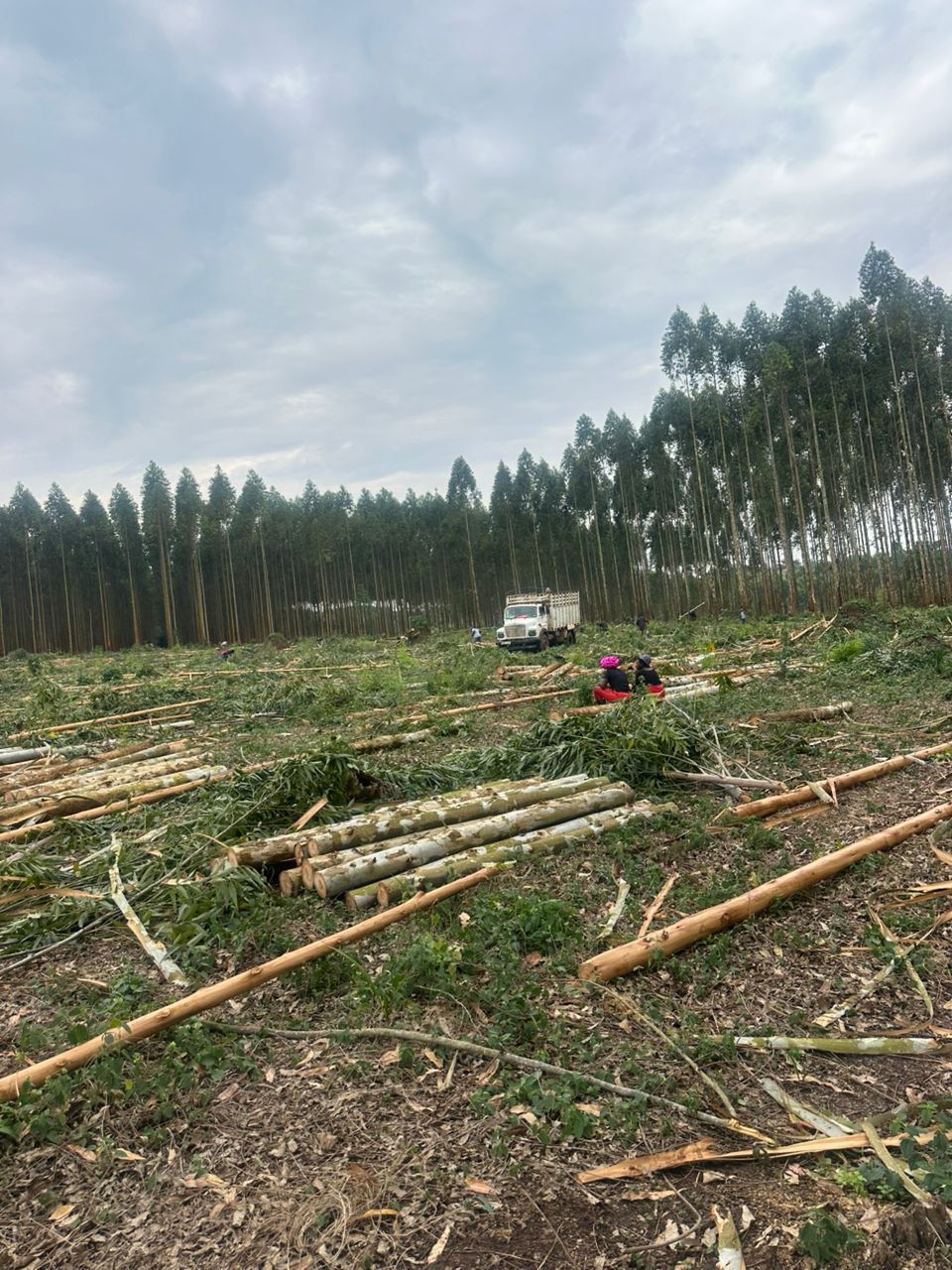
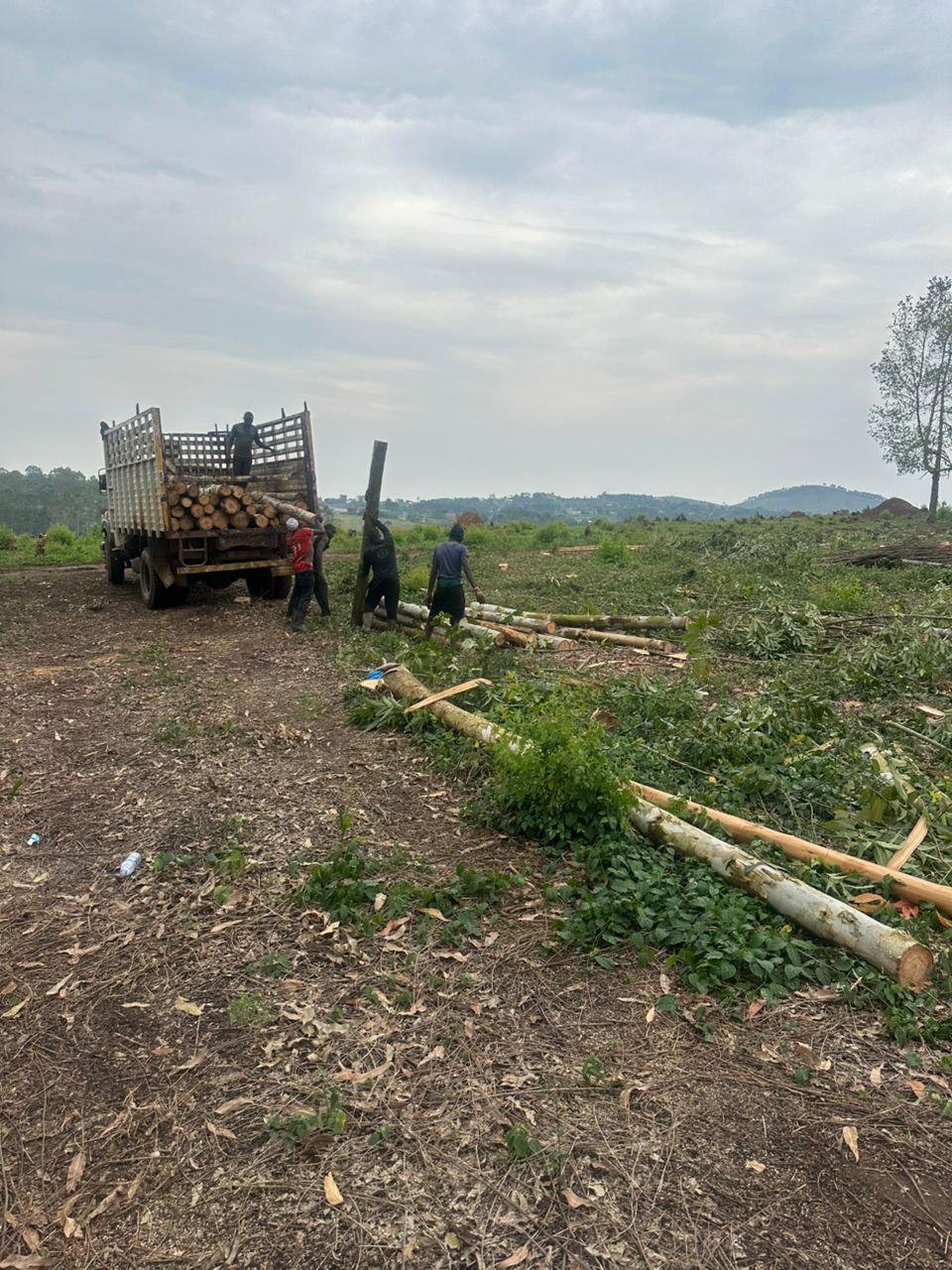
Soil Requirements for Eucalyptus, Pine and Teak in Uganda
Four soil properties decide what will grow: depth, drainage, pH and texture. In rough order of importance for Uganda: drainage first, then depth, then pH, then texture.
Eucalyptus wants deep (60cm+), well-drained, slightly acidic to neutral loam. Pine tolerates poorer, more acidic and shallower soils than eucalyptus. Teak demands deep (1m+), free-draining, fertile, near-neutral to alkaline soil and fails on acidic ground.
Nothing on this list tolerates waterlogging. If the water table sits near the surface in the wet season, that ground is not a plantation site — and in Uganda it may also be legally protected.
Species choice gets all the attention and soil decides the outcome. A mediocre species on good ground beats an excellent species on bad ground, every time. This guide is about finding out which you have before you spend money.
Requirements by Species
| Eucalyptus | Pine | Teak | Musizi | |
|---|---|---|---|---|
| Minimum depth | 60cm; 1m preferred | 50cm workable | 1m+ essential | 1m preferred |
| pH | 5.5–7.0 | 4.5–6.5 — tolerates acid | 6.5–7.5 — dislikes acid | 5.5–7.0 |
| Drainage | Free-draining essential | Free-draining essential | Free-draining, absolutely | Free-draining essential |
| Texture | Loam or sandy loam best | Tolerates sandy and light soils | Loam; dislikes heavy clay | Deep loam |
| Fertility | Moderate; responds to good ground | Low tolerated | High — a demanding feeder | High — wants good ground |
| Best for poor sites? | No | Yes — the rescue species | No — the fussiest | No |
The most useful line in that table is the last one. If your site assessment comes back marginal, pine is the question to ask next. It will produce a crop on land that would not carry a decent eucalyptus stand, and it is the reason a lot of Ugandan hill ground is under pine rather than eucalyptus.
How to Dig and Read a Soil Pit
You do not need a laboratory to make the most important decisions. You need a spade, a tape and an afternoon.
The method
- Dig at least three pits across the block — top of slope, mid-slope, bottom. One pit tells you about one pit.
- Go to at least one metre, or until you physically cannot.
- Do it at the end of the wet season if you possibly can. Waterlogging that is glaring in April is invisible in January.
- Photograph each face with the tape in shot, and note the depth of each change.
What you are looking for, in order:
- How deep can you actually dig? If a spade stops at 40cm on rock, hardpan or laterite, that is your rooting depth — not the number in the soil map.
- Grey or blue-grey horizons. These mean the soil is waterlogged for part of the year. Decisive, and disqualifying.
- Orange, red or grey mottling. Same message: a fluctuating water table. The higher the mottling, the worse the problem.
- A hard, compacted layer you cannot push a knife into. Roots cannot either. Sub-soiling may break it if it is shallow; deep laterite cannot be fixed.
- Texture. Roll moist soil between your fingers. Gritty is sandy, silky is silt, sticky and mouldable is clay. A loam does a bit of all three — that is what you want.
- Structure and roots. Good soil crumbles into aggregates and has old root channels running through it. A solid, structureless block is bad news.
- Colour. Dark topsoil means organic matter. Deep uniform red usually means well-drained and heavily weathered — typical of much of central Uganda and generally fine.
When to send samples to a laboratory: when you are committing to a large block, when pH is genuinely in doubt, when teak is on the table (pH is decisive), or when previous plantings on the site have failed for no obvious reason. For a smallholding, the pit usually tells you what you need.
We dig the pits, read the profile and match the species. One day, one clear answer.
Uganda's Main Soil Types
| Soil type | Where | Character | Verdict |
|---|---|---|---|
| Ferralsols | Widespread — central and southern Uganda | Deep, red, heavily weathered, well-drained, low in nutrients | Good for eucalyptus and pine. Fertilise at establishment. |
| Acrisols | Central, Lake Victoria crescent | Acidic, clay-enriched subsoil, moderately fertile | Workable for eucalyptus; good for pine |
| Nitisols | Volcanic areas — Elgon, south-west | Deep, fertile, well-structured | Excellent. The best forestry soils in Uganda |
| Vertisols | Cattle corridor, parts of the east | Heavy black clay; cracks when dry, sticky when wet | Avoid. Poor drainage and root damage from shrink-swell |
| Gleysols | Valley bottoms, wetland margins | Waterlogged, grey, reduced | Do not plant. Often legally protected too |
| Leptosols | Steep slopes, rocky ground | Very shallow over rock | Marginal. Pine at best; often nothing |
| Arenosols | Sandy areas, parts of the north | Sandy, free-draining, low fertility and water holding | Pine, or drought-tolerant E. camaldulensis |
Soil maps are a starting point, never a substitute for digging. Uganda's terrain produces sharp local variation — a valley in Mubende can behave like Masindi and a ridge in Wakiso can be surprisingly dry and thin.
Six Soil Red Flags
- Standing water in the wet season. Not a plantation site. Full stop.
- Grey or mottled horizons within 50cm. A high fluctuating water table.
- Hardpan or laterite within 50cm. Roots stop where the spade stops.
- Heavy black cracking clay. Vertisols shear roots as they shrink and swell.
- Bare eroded subsoil with no topsoil left. Establishment will be very difficult and slow.
- A previous planting that failed on this ground. The most informative single piece of evidence available to you. Find out what was planted, when, and what the failure looked like.
What You Can Fix and What You Cannot
| Problem | Fixable? | How |
|---|---|---|
| Low fertility | Yes | Fertiliser at planting; compost in the pit; nitrogen-fixing companions |
| Shallow compaction / plough pan | Often | Sub-soiling to 45–60cm before planting |
| Mildly acidic soil | Partly | Lime; or simply choose a species that tolerates it — usually cheaper |
| Weed competition | Yes | Proper year-one weeding — the highest-return operation in the rotation |
| Slope and erosion risk | Partly | Contour planting, terracing, cover between rows |
| Shallow soil over rock or deep laterite | No | Match the species down, or do not plant |
| Waterlogging / high water table | No | Do not plant. Drainage of wetland areas is also restricted in Uganda |
| Heavy cracking clay | No | Choose different land |
Matching Species to the Ground You Have
Read this as a decision sequence rather than a menu:
- Waterlogged or seasonally flooded? Plant nothing. Confirm the wetland and riverbank setbacks with NEMA — see eucalyptus and water.
- Deep, fertile, free-draining, near-neutral, with a real dry season? Teak if you are in the north or West Nile; musizi or indigenous hardwoods in the centre.
- Deep, moderately fertile, free-draining, slightly acidic? Eucalyptus — the mainstream Ugandan answer.
- Shallower, more acidic, poorer? Pine.
- Sandy, dry, low fertility? E. camaldulensis or pine.
- Steep and erodible? Contour planting, or agroforestry with grass strips.
If you would rather have someone dig the pits, read the profile and give you a written recommendation, that is exactly what our forestry consultancy service does. It costs a fraction of an establishment budget and it is the cheapest insurance available in this business.
Frequently Asked Questions
What soil is best for eucalyptus in Uganda?
Deep (60cm minimum, a metre preferred), well-drained loam or sandy loam with a pH between about 5.5 and 7.0.
Uganda's widespread Ferralsols and Acrisols are generally suitable with fertiliser at establishment. What eucalyptus will not tolerate is waterlogging — valley bottoms and seasonally flooded ground produce stunted, disease-prone stands.
How deep should soil be for tree planting?
As a working minimum: 50cm for pine, 60cm for eucalyptus (a metre preferred), and a full metre or more for teak and musizi.
Measure it by digging, not by consulting a map. If the spade stops at 40cm on hardpan or laterite, that is your rooting depth regardless of what any soil survey says.
How do I test my soil before planting trees?
Dig at least three pits across the block — top, middle and bottom of slope — to a metre or until you cannot go further, ideally at the end of the wet season.
Look for rooting depth, grey or mottled horizons (waterlogging), hard compacted layers, texture by feel, structure, and old root channels. Send samples to a laboratory when committing to a large block, when pH is in doubt, or when teak is on the table.
Can I plant trees on clay soil?
It depends on the clay. Moderate clay content in a loam is fine and holds water usefully. Heavy black cracking clay — Vertisols — is not: it shears roots as it shrinks and swells, and drains badly.
If you can push a knife into moist soil with reasonable effort and it does not crack into deep fissures when dry, you are probably fine.
What does grey or mottled soil in a pit mean?
It means the soil is waterlogged for part of the year. Grey or blue-grey horizons indicate sustained saturation; orange and grey mottling indicates a fluctuating water table.
The higher up the profile you find it, the worse the problem. It is the single most decisive and most commonly ignored observation in site assessment, and it disqualifies a site for every commercial species grown in Uganda.
Which tree grows best on poor soil in Uganda?
Pine. Pinus caribaea tolerates poorer, more acidic and shallower soils than eucalyptus, teak or musizi, and will produce a crop on land that would not carry a decent eucalyptus stand.
On sandy, dry, low-fertility ground, drought-tolerant E. camaldulensis is the other option worth considering.
Can I improve bad soil rather than changing species?
Some things yes, some no. Low fertility, shallow compaction, mild acidity, weed competition and erosion risk are all addressable at reasonable cost.
Shallow soil over rock, deep laterite, waterlogging and heavy cracking clay are not. For those, match the species down or choose different land — trying to engineer around them is how people lose money slowly.
Get the Soil Checked First
A day of soil pits costs a fraction of an establishment budget and is the only way to know what your land will actually grow. We do this as standard.
Over a decade establishing, measuring and managing eucalyptus, pine and indigenous plantations across Uganda. Based in Wakiso, Kampala. Reviewed and updated August 13, 2026.