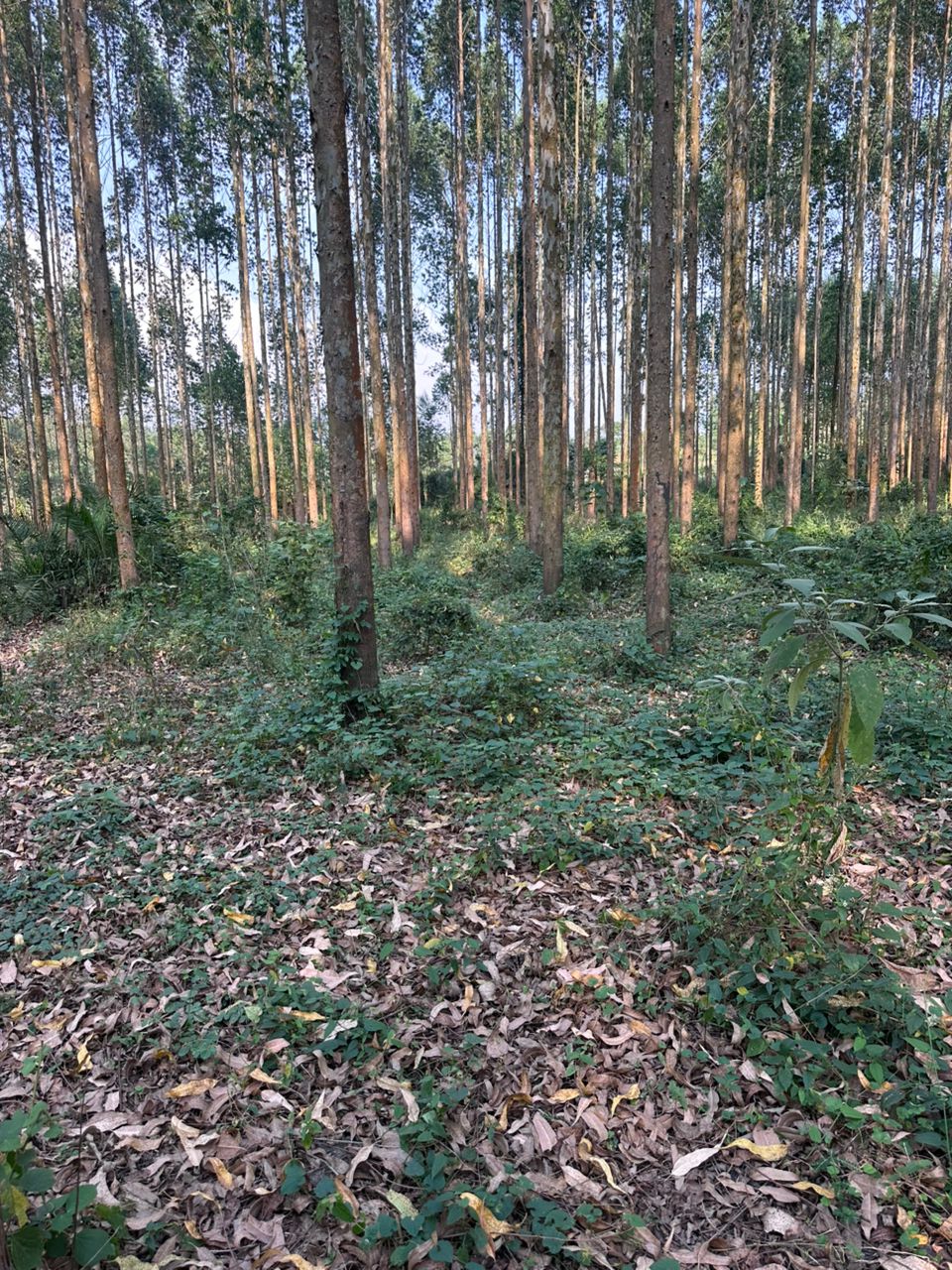
One Rainy Season Changes Everything
The single most important technical fact about forestry in the north is that rainfall is unimodal — broadly one extended wet season from around April to October, then a long, hot, genuinely dry period.
Practical consequences that catch out growers who learned forestry further south:
- One planting window a year. Miss it and you wait twelve months, not four. Nursery ordering and land preparation must be scheduled around that far more tightly.
- Plant early in the season, not late. Seedlings need to establish a root system deep enough to survive the first dry season. Late planting is the commonest cause of first-year mortality here.
- The dry season is a survival test, not a pause. Weed competition for moisture in the run-up to it matters enormously.
- Fire risk is on another scale. Long dry grass, widespread burning practice, and open landscapes. Firebreaks are not a formality in the north.
Species That Actually Work in the North
| Species | Where | For | Note |
|---|---|---|---|
| Eucalyptus camaldulensis | Throughout the north | Poles, firewood, charcoal | The workhorse. Genuinely drought-tolerant; coppices strongly |
| GC clones (grandis × camaldulensis) | Better sites | Poles | Growth of grandis with camaldulensis tolerance — where good stock is available |
| Teak (Tectona grandis) | West Nile especially — Arua, Nebbi, Zombo, Koboko | Premium timber | The pronounced dry season suits it. Needs deep, free-draining, non-acidic soil |
| E. grandis | Only the wetter, better sites | Poles | Struggles where camaldulensis thrives. Do not default to it here |
| Pine | Selected sites | Sawn timber | Viable but fire risk over a 15–20 year rotation is a serious consideration |
| Indigenous / shea | Throughout | Multiple | Existing indigenous trees often have real value and local significance — identify before clearing |
Teak in West Nile is the region's most distinctive opportunity. It is one of the few places in Uganda where conditions genuinely suit a premium international timber, and teak has been grown there for decades. It is also unforgiving — deep, free-draining, near-neutral soil is essential, and the rotation runs past twenty years. Full detail in the teak guide.
Land Tenure: The Most Important Part of the Job
We will be direct about this, because it is where northern forestry projects most often come apart.
Much land in northern Uganda is held under customary tenure, frequently with communal or family interests, and the arrangements are not always documented in a form that survives a twenty-year timber rotation. Displacement during the conflict years complicated many claims further.
Why this matters more for trees than for crops
- Trees are visible, immovable and take years. An annual crop can be moved next season. A ten-year plantation cannot.
- Disputes surface when the crop becomes valuable, not when it is planted — typically five to eight years in, after everything has been spent.
- Planting trees can itself be read as a claim to land, which makes an ambiguous situation worse rather than better.
- A seven-year eucalyptus rotation tolerates ambiguity that a twenty-five-year teak rotation does not. Match the crop to the security of your position.
We are not lawyers and we do not give legal advice. What we do is tell you plainly, before you spend money, when a site assessment turns up a tenure question that needs resolving first — and we would rather lose the engagement than watch a client plant into a dispute.
Fire
Central Uganda growers treat firebreaks as good practice. In the north they are the difference between having a plantation and not having one.
- Wide external firebreaks, maintained every single dry season without exception.
- Internal breaks dividing large blocks, so one fire does not take everything.
- Early burning of break lines before the grass is fully cured, rather than fighting fire when it arrives.
- Talk to your neighbours. Most fires arrive from adjacent land, often from routine agricultural or hunting burning. This is a relationship problem as much as a technical one.
- Consider the rotation. Pine at fifteen to twenty years carries fifteen to twenty dry seasons of exposure. Eucalyptus at six carries six — and coppices if the worst happens.
Markets in the North
The market picture differs from central Uganda in ways that affect what you should plant:
- Construction demand has grown substantially across the northern towns, supporting poles and sawn timber.
- Charcoal and firewood demand is strong, which suits E. camaldulensis and gives a shorter-rotation option.
- Distance to Kampala is significant, so transport cost weighs more heavily on anything sold south — local and regional markets usually make better sense.
- Cross-border demand toward South Sudan and DRC is a real factor from the north and West Nile. See timber export.
- Teak has an export-oriented buyer base that ordinary plantation species do not.
What We Do in the North
- Site assessment matched to unimodal conditions — soils, drainage, fire exposure, and an honest species recommendation
- Tenure risk flagging before you commit capital, so you resolve it first
- Boundary mapping and acreage verification — see GIS services
- Teak feasibility in West Nile, including the soil work that decides it
- Establishment planning around the single planting window
- Fire management planning — break layout, maintenance schedule, neighbour engagement
- Inventory, valuation and sale support when the crop is ready
We batch visits by region, so tell us your timeline early. If you are working to a single planting window, the assessment needs to happen well before it.