Exporting Timber from Uganda: Requirements, Buyers and Traceability
Exporting timber from Uganda requires: lawful, documented origin for the wood; forestry and customs documentation; a phytosanitary certificate for the plant-health requirements of the destination; and increasingly, traceability evidence proving where the trees actually grew.
In 2023 a government policy committee resolved to stop timber exports by those not adding value[1], and a 2024 news report quoted a timber company saying sawn timber could not be exported[2]. Whether sawn timber may leave Uganda in 2026 is not confirmed: ask the National Forestry Authority in writing for your product before contracting.
The biggest change is on the buyer side. European due-diligence rules require importers to demonstrate that timber is legal and deforestation-free, with geolocation of the plot of origin. That obligation gets pushed down the chain to you.
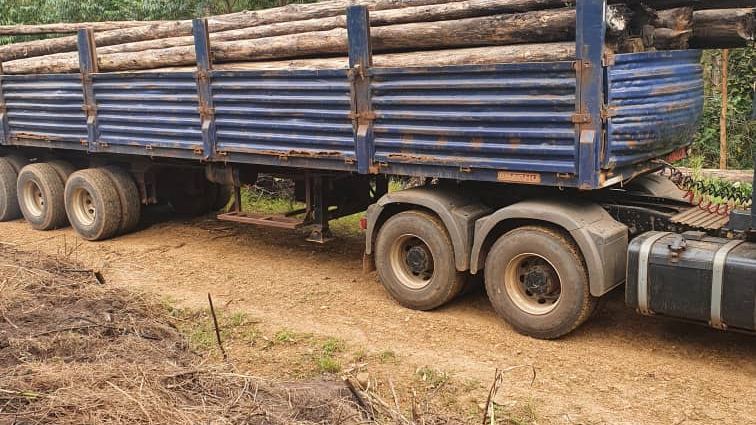
Timber export is where a lot of Ugandan forestry ambition goes, and it is also where a lot of it stops, because the requirements are administrative rather than technical and nobody enjoys them. This guide sets out the structure so you know what you are taking on.
Read this as a map, not as current law. Export restrictions, fee schedules and international due-diligence timelines all change, and some have changed more than once recently. Confirm the current position with the National Forestry Authority, the Uganda Revenue Authority, the Ministry of Agriculture, Animal Industry and Fisheries (for phytosanitary matters) and Uganda Export Promotion Board before you contract on anything here.
Processed, Not Raw Logs
Uganda has used export restrictions to push value addition onshore. The policy logic is straightforward: a sawn or dried product employs more Ugandans and earns more per cubic metre than a raw log. What the current restriction covers is less clear:
- The 2023 resolution. In a report dated 29 June 2023, the Office of the Prime Minister said a national policy committee had resolved to end timber exports, and quoted the Prime Minister limiting the withdrawal of licences to exporters “not adding value”[1].
- Unprocessed or sawn? A 2024 InfoNile report said the presidential directive covered “unprocessed timber products”, yet quoted the head of Busoga Forestry Company saying that in practice sawn timber could not be exported[2]. That is one company’s account in a news report, not an official ruling.
- Not confirmed: whether the ban is in force in 2026, and whether it covers sawn timber. Ask NFA in writing for your product and species before you sign an export contract.
For a grower or trader, three consequences:
- Plan around processing. Either you invest in it, or you sell to someone who has. Building an export model on raw log shipment is building on sand.
- Processing is where the margin is anyway. Kiln-dried, graded, dimensioned timber sells into entirely different markets than green sawn wood.
- Confirm the current rules for your specific product and species. The reports above leave open whether sawn timber counts as processed, and indigenous species generally face more scrutiny than plantation species — see indigenous hardwoods.
The Documentation Chain
Export documentation is a chain, and it starts long before the container. Each link proves the one before it.
| Stage | What you need | Who |
|---|---|---|
| Origin | Proof of lawful harvest — land title or licence, harvesting authorisation | You, your district, NFA |
| Movement | Timber movement permits for transport from the plantation | NFA / district forestry office |
| Processing | Records linking input logs to output product | Your mill or your supplier's |
| Plant health | Phytosanitary certificate to the destination's requirements | MAAIF plant protection services |
| Export clearance | Customs declaration, export documentation, any forestry export authorisation | URA; NFA where applicable |
| Commercial | Invoice, packing list, certificate of origin, bill of lading | You, freight forwarder, issuing body |
| Buyer due diligence | Traceability pack — see below | You |
The link that breaks
- Almost always the first one. Timber bought from an intermediary with no documented origin cannot be legitimised further down the chain.
- If you cannot show which plot the wood came from and that harvesting there was lawful, no phytosanitary certificate or customs form fixes it.
- Buy documented, or grow it yourself. That is the whole discipline.
EU Due Diligence: The Big Change
The most consequential development for Ugandan timber exporters is not a Ugandan rule at all. It is the EU Deforestation Regulation, which requires operators placing covered commodities — wood among them — on the EU market to demonstrate that the goods are legally produced and deforestation-free, supported by geolocation data for the plot of production.
Its application timeline has been revised more than once, and the detail of implementation continues to develop. Do not plan around a date you read somewhere — confirm the current position with your buyer and with the Uganda Export Promotion Board before you commit.
What does not change is the direction of travel, and what it means practically:
- Geolocation of your plots. Coordinates or polygons for the land the timber came from. Not the district — the plot.
- Evidence the land was not deforested. Land-cover history demonstrating the plot was not converted from forest after the relevant cut-off. This is satellite work — see our land-cover change detection service.
- Proof of legal production under Ugandan law — tenure, harvesting rights, permits, labour and environmental compliance.
- A chain of custody connecting the shipment back to those plots through every processing and handling step.
The strategic implication for Ugandan growers is genuinely favourable. A plantation established on former grassland or degraded farmland, with clear title and documented management, is exactly what these rules are designed to favour. Growers who can produce that evidence pack gain access to buyers who cannot source from anyone who cannot.
We build geolocation and land-cover evidence packs for exporters.
Building a Traceability Pack
Whether or not you sell to Europe, this is now the shape of what serious buyers ask for. Build it once and reuse it.
| Component | What it is | How to get it |
|---|---|---|
| Plot geolocation | GPS polygon of each block, with area | Boundary walk with GPS; delivered as KML and shapefile |
| Land-cover history | Satellite evidence of what the land was before planting | Archive imagery analysis |
| Tenure evidence | Title, lease or licence; consents where relevant | Your own records |
| Establishment records | Planting dates, species, spacing, source of seedlings | Keep them from day one — they cannot be reconstructed |
| Management records | Operations, inputs, survival counts, thinning | A simple written log per block |
| Harvest records | Volumes by block and date, movement permits | Harvest register |
| Processing records | Input-to-output reconciliation at the mill | Mill records; specify it in your processing contract |
| Compliance evidence | Environmental and labour compliance | See ESG consultancy |
Certification — FSC or PEFC — is not legally required but substantially simplifies buyer due diligence and opens premium segments. It is a significant undertaking and makes most sense at scale or through a group scheme.
The Regional Market
Before reaching for Europe, look closer. For most Ugandan producers the regional market is the realistic first export step:
- Kenya, Rwanda, South Sudan and DRC all import wood products, and Uganda has genuine geographic advantage into several of them.
- East African Community arrangements simplify trade relative to intercontinental shipping.
- Documentation burden is lighter than EU due diligence, though origin documentation is still required.
- Transport is by road, which changes the economics entirely and makes smaller consignments viable.
- Product fit is often better — construction timber, poles and furniture stock rather than the specialised grades European buyers want.
Many Ugandan producers discover that regional demand absorbs everything they can produce, at margins that do not justify the compliance load of intercontinental export. That is a perfectly good outcome.
Where to Actually Start
- 1. Establish what you have. Measured volumes by species and grade. Buyers ask for specifics, and an unmeasured claim ends the conversation — see tree buyers.
- 2. Sort out origin documentation before approaching anyone. It is the link that breaks.
- 3. Talk to the Uganda Export Promotion Board. They exist for this and know current requirements and buyer contacts.
- 4. Start regional. Learn the documentation discipline on a road shipment to Kenya before attempting a container to Europe.
- 5. Build the traceability pack now, even if you are not exporting yet. Establishment records cannot be reconstructed later, and every year you delay is a year of history you lose.
- 6. Get the geolocation and land-cover history done. It serves export, ESG, carbon eligibility, lender due diligence and your own valuation simultaneously.
That last point is the one worth acting on regardless of whether you ever export. The same evidence pack answers four different commercial questions, and it gets cheaper the earlier you start it.
Importers looking for documented growers can start with our timber buyer introductions.
Frequently Asked Questions
Can I export raw logs from Uganda?
Assume not. In 2023 a government policy committee resolved to stop timber exports by those not adding value and to cancel their licences, and a news report the following year said the presidential directive covered unprocessed timber products. Sources 1 and 2 below.
Do not assume sawn timber is allowed either: the same report quoted one timber company saying sawn timber could not be exported. The position in 2026 is not confirmed, so ask the National Forestry Authority in writing for your specific product before contracting.
What documents do I need to export timber from Uganda?
A chain of them: proof of lawful origin (title or licence and harvesting authorisation), timber movement permits, processing records linking logs to product, a phytosanitary certificate meeting the destination's plant-health requirements, customs and export documentation, and standard commercial documents.
Increasingly buyers also require a traceability pack with plot geolocation and land-cover history. Confirm current requirements with NFA, URA, MAAIF and the Uganda Export Promotion Board.
What is EUDR and does it affect Ugandan timber?
The EU Deforestation Regulation requires operators placing covered commodities including wood on the EU market to demonstrate the goods are legally produced and deforestation-free, supported by geolocation data for the plot of production. That obligation is pushed down the supply chain to producers.
Its application timeline has been revised more than once and implementation detail continues to develop — confirm the current position with your buyer rather than planning around a date. The direction of travel is not in doubt.
How do I prove my timber is deforestation-free?
With geolocation of your plots — coordinates or polygons, not district names — combined with satellite land-cover history showing the land was not converted from forest after the relevant cut-off date.
This is exactly what a plantation established on former grassland or degraded farmland can demonstrate easily, which is why compliant Ugandan growers stand to gain from these rules rather than lose.
Do I need FSC certification to export timber?
Not legally, but it substantially simplifies buyer due diligence and opens premium market segments. Many buyers treat it as a shortcut through their own compliance process.
It is a significant undertaking and makes most sense at scale or through a group certification scheme. For most Ugandan producers, a solid traceability pack is the higher-priority investment.
Should I export to Europe or sell regionally?
Start regionally. Kenya, Rwanda, South Sudan and DRC all import wood products, East African Community arrangements simplify trade, transport is by road so smaller consignments work, and the product fit is often better — construction timber and poles rather than specialised European grades.
Many Ugandan producers find regional demand absorbs everything they can produce at margins that do not justify the compliance load of intercontinental export. That is a perfectly good outcome.
When should I start building traceability records?
Now, whether or not you intend to export. Establishment records — planting dates, species, spacing, seedling source — cannot be reconstructed later, and every year of delay is a year of history lost.
The same evidence pack answers four commercial questions simultaneously: export due diligence, ESG buyer requirements, carbon project eligibility, and lender or purchaser due diligence at sale.
Planning to Export?
Export requirements change, and EU due-diligence rules now reach back to your plot boundary. We build the traceability pack buyers ask for.
Over a decade establishing, measuring and managing eucalyptus, pine and indigenous plantations across Uganda. Based in Wakiso, Kampala. Export-ban section updated 10 October 2026; its sources were read 9 October 2026.
Related Articles
Sources
Sources for the export-ban statements on this page.
- Office of the Prime Minister, Uganda, news release on the timber export ban, 29 June 2023. opm.go.ug. Read 9 October 2026.
- InfoNile, report by Ronald Musoke on the effects of the timber export ban, 20 August 2024. infonile.org. Read 9 October 2026.