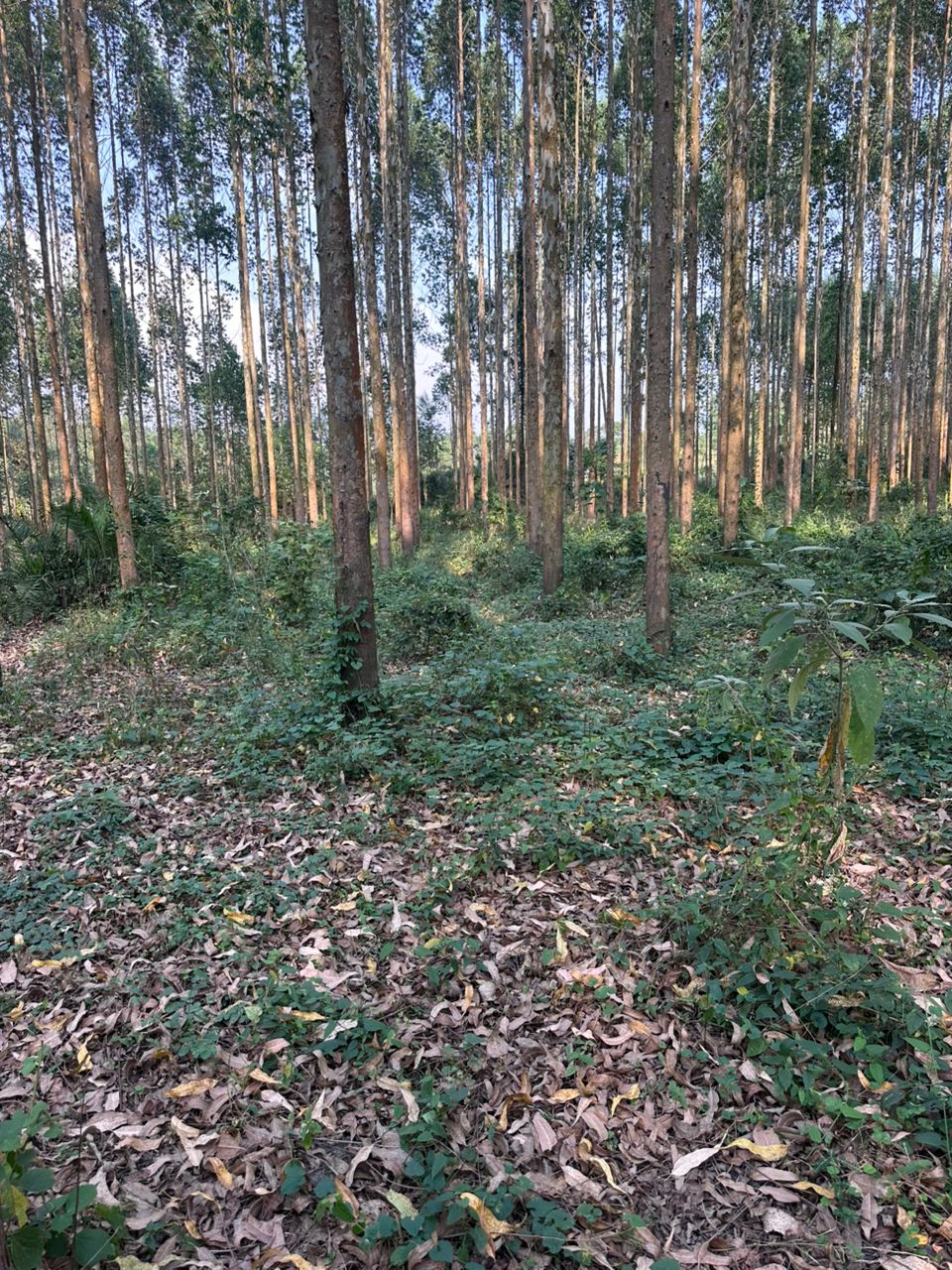
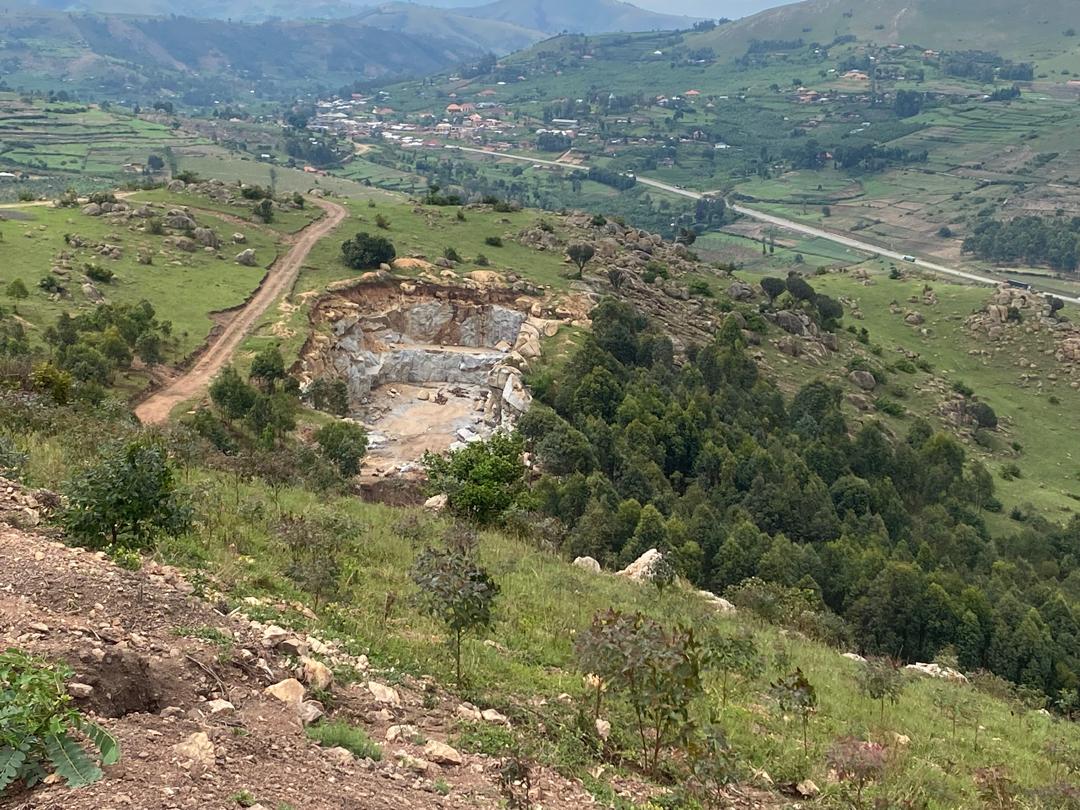
Tree Spacing Guide: What Spacing for Which Species and Purpose
Work backwards from the product, then adjust down for site quality.
Spacing is not a species characteristic — it is a decision about what you intend to sell. The same species is planted at 2m for firewood and 4m for sawlogs, and the difference between those two blocks in year fifteen is total.
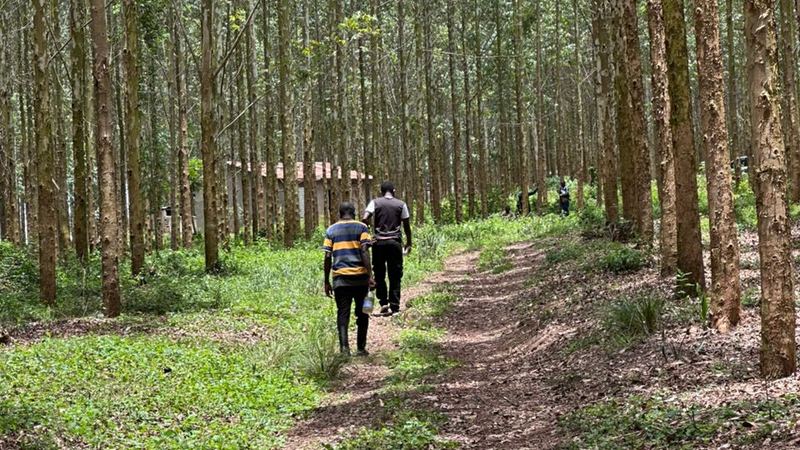
What Actually Decides Spacing
- 1. The product. Volume products (firewood, charcoal, pulp) want density. Diameter products (sawlogs, veneer, large poles) want space. This is the primary factor.
- 2. Site quality. A poor site cannot carry full stocking to merchantable size. Thin soil, low rainfall or exposure all argue for wider spacing than the textbook figure.
- 3. Whether you will thin. Close initial spacing plus disciplined thinning gives excellent form. Close spacing without thinning gives a thicket. If you cannot fund thinning, start wider.
- 4. Management access. Machinery, intercropping and pruning all need working room. There is no point in a spacing you cannot operate in.
Spacing by End Product
| Product | Spacing | Trees / acre | Logic |
|---|---|---|---|
| Biomass / energy | 1.5–2m | 1,012–1,799 | Maximum volume per hectare per year; form irrelevant |
| Firewood, charcoal | 2m | 1,012 | Weight and volume, short rotation, coppice |
| Pulpwood | 2–2.5m | 647–1,012 | High stem count, uniform small diameter |
| Building poles | 2.5m | 647 | Straight stems, fast canopy closure, moderate diameter |
| Transmission poles | 2.5–3m | 450–647 | Greater length and diameter needed |
| Sawlogs | 3–4m + thinning | 253–450 | Diameter is everything; thinning concentrates growth |
| Veneer / premium | 4m + thinning + pruning | 253 | Clear knot-free stem is the product |
| Agroforestry | 3×4m to 5×5m | 162–337 | Alleys for crops; light reaching the ground |
Spacing by Species
| Species | Poles / small | Timber / sawlogs | Notes |
|---|---|---|---|
| Eucalyptus | 2–2.5m | 3–4m | Fast canopy closure; coppices, so rotations 2–3 reuse the stumps |
| Pine | 2.5m | 3m + thinning | Thinning is essential for sawlog diameter; does not coppice |
| Teak | — | 3m + thinning + pruning | Pruning decides value; needs access to prune |
| Cypress | 2.5m | 3m | Common in highland East Africa for sawn timber |
| Gmelina | 2.5–3m | 3–4m | Very fast in humid tropics |
| Acacia (fuelwood) | 2m | — | Tolerates poor sandy soils; nitrogen fixing |
| Poplar / willow | 2–3m | 4–6m | Very fast; often on wetter temperate sites |
| Mahogany | — | Mixed or scattered | Shoot borer defeats pure blocks — dilution is the defence |
| Indigenous hardwoods | — | 3–4m or scattered | Very long rotation; often better in mixtures |
Not sure what your site will carry? That is exactly what a site assessment answers.
Adjusting for Site Quality
The adjustment most growers never make
- Textbook spacings assume a good site. On thin, dry, shallow or exposed ground, that stocking will not reach merchantable size.
- On a poor site, go wider than the book. Fewer trees, each with enough resource to become saleable, beats more trees that all stay small.
- The instinct runs the other way — growers on poor land often plant tighter to "make up for" slow growth, which makes it worse.
- Rooting depth, drainage and rainfall are what you are reading. Dig three pits before you set out the block.
Spacing and Thinning Are One Decision
You cannot choose spacing sensibly without deciding the thinning regime at the same time.
- Close initial spacing + disciplined thinning = excellent form, natural branch shedding, good final diameter. This is the classic sawlog regime.
- Close initial spacing + no thinning = a thicket of thin suppressed stems. The commonest plantation failure worldwide.
- Wide initial spacing + no thinning = acceptable diameter but heavier branching, so pruning matters more.
- Wide initial spacing + pruning = a workable regime where thinning cannot be funded.
If you cannot commit to thinning, do not plant at thinning spacings. Plant wider and prune instead. That is a legitimate regime; planting tight and never thinning is not.
Three Spacing Mistakes
- Copying the neighbour. Their spacing reflects their product and their soil, which may not be yours.
- Planting tight to "maximise" the land. More stems is not more value once competition sets in. This costs more money worldwide than any other spacing error.
- Forgetting access. A block planted wall to wall with no extraction route means a harvesting contractor either refuses the job or damages a swathe of standing trees getting in.
Frequently Asked Questions
How far apart should trees be planted?
It depends on what you are growing them for. Volume products such as firewood and pulp go tight, around 2m; poles around 2.5m; sawlogs 3–4m with thinning; orchards and agroforestry wider still.
Then adjust for site: on thin, dry or shallow ground, go wider than the textbook figure because the site cannot carry full stocking to merchantable size.
What is the best spacing for timber trees?
For sawlogs, 3m × 3m to 4m × 4m combined with a thinning regime — diameter is the product, and diameter needs growing space.
Close initial spacing with disciplined thinning also works and gives better form, but only if you actually thin. If you cannot fund thinning, start wider and prune.
Does spacing affect timber quality?
Substantially. Close spacing encourages trees to shed lower branches naturally, producing cleaner knot-free timber, but suppresses diameter growth if not relieved by thinning.
Wide spacing gives diameter but heavier branching, which means pruning matters more if you want clear timber.
Should I plant closer on poor soil?
No — the opposite, though the instinct runs the other way. A poor site cannot support full stocking to merchantable size, so tighter spacing produces more trees that all stay small.
Go wider than the book on thin, dry or shallow ground. Fewer saleable stems beats many unsaleable ones.
Can I change spacing after planting?
Only downward, by thinning. You can remove trees to widen effective spacing, but you cannot add them back into a closed stand.
Which is why the decision matters at planting, and why thinning has to be planned and budgeted from the start rather than considered later.
Choose Spacing, Do Not Copy It
The right spacing depends on what you are selling and what your soil will carry. We assess both and give you a layout.
Over a decade establishing, measuring and managing eucalyptus, pine and indigenous plantations across Uganda. Based in Wakiso, Kampala. Reviewed and updated September 6, 2026.
Keep going
These apply the same way in any country.