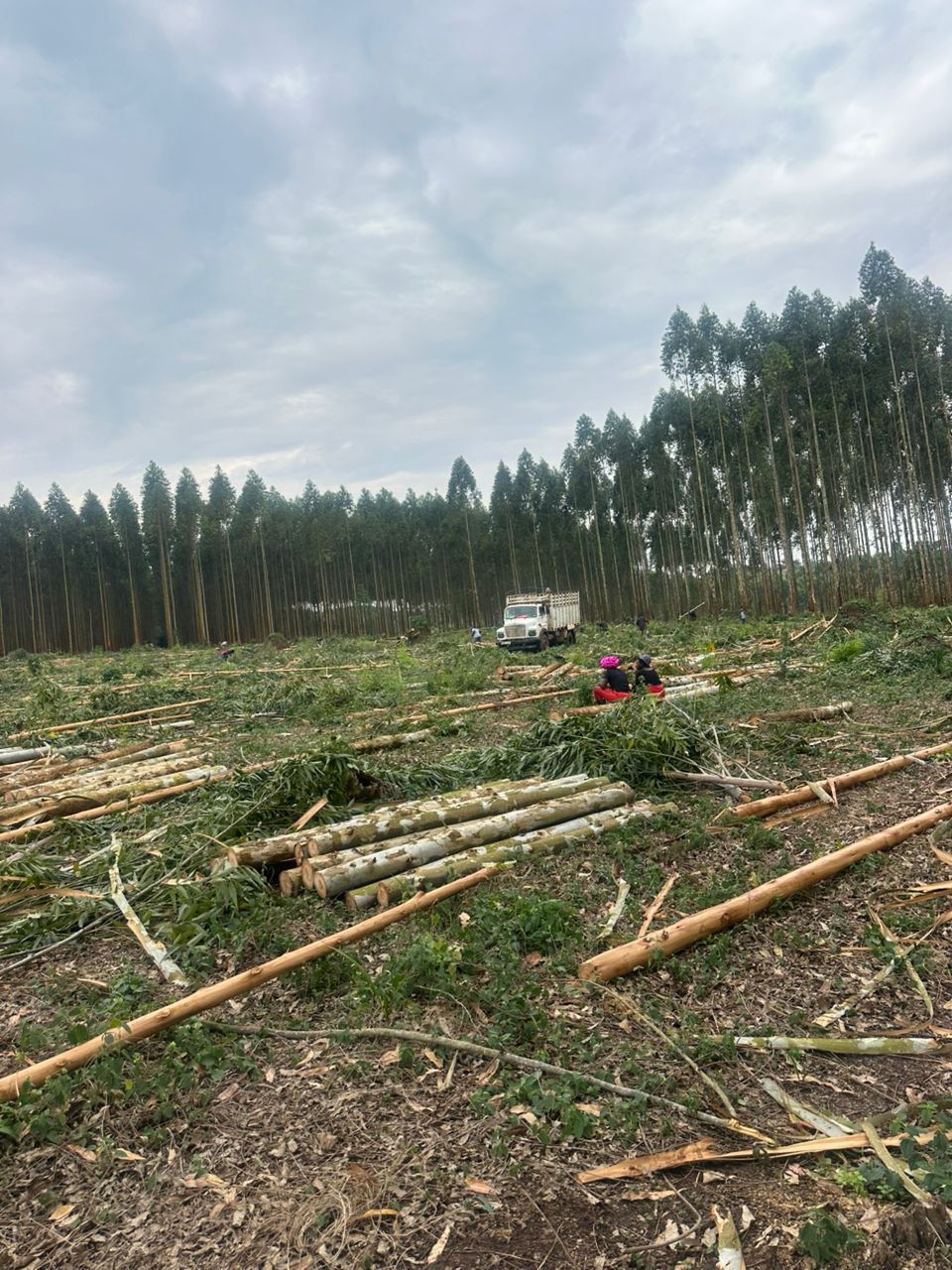
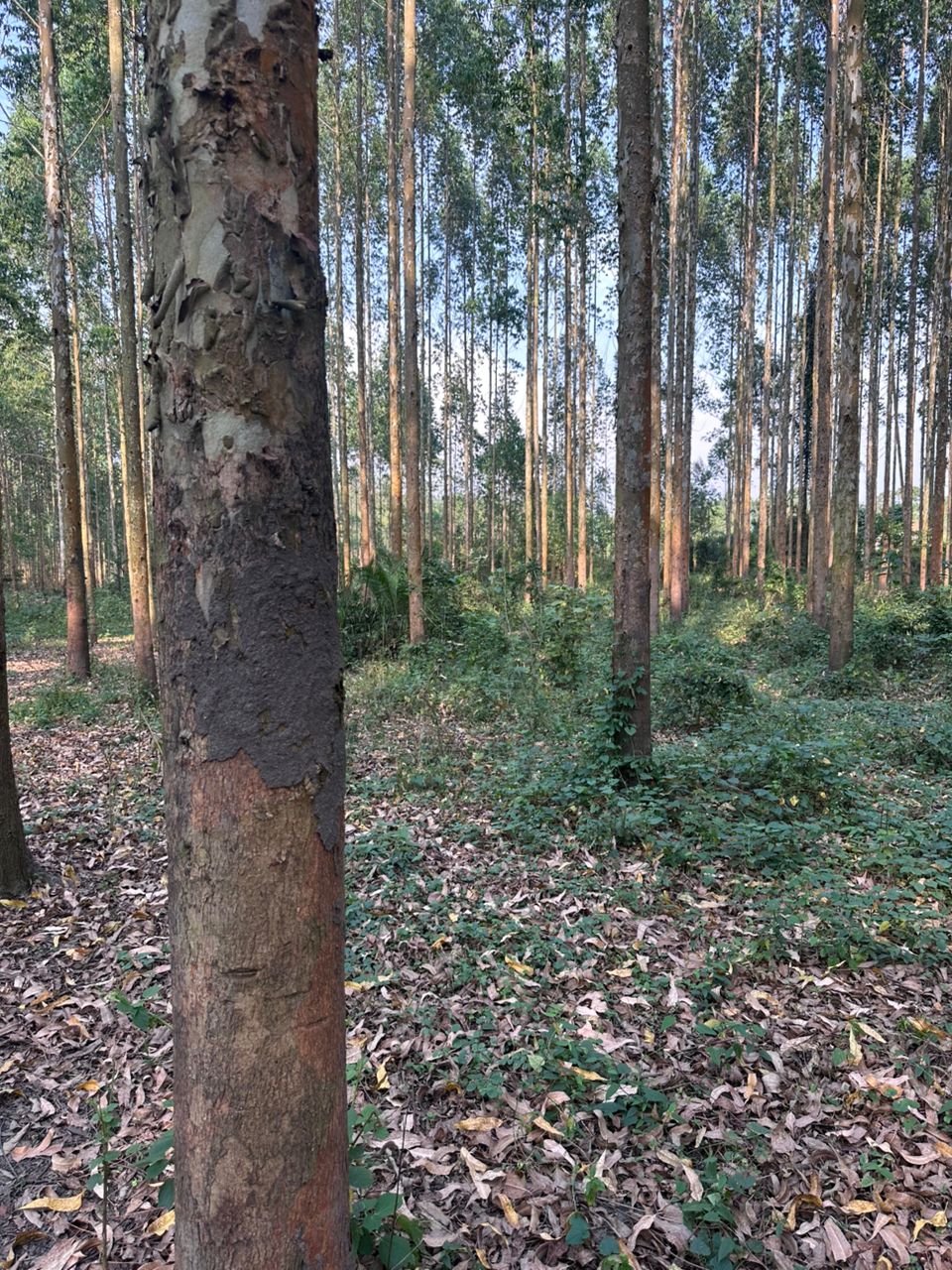
How Many Trees Per Acre? The Complete Spacing Reference
2.5m × 2.5m → 647 trees per acre (1,600 per hectare). 3m × 3m → 450 per acre (1,111/ha). 2m × 2m → 1,012 per acre (2,500/ha). 10ft × 10ft → 436 per acre.
The formula for any spacing: trees per acre = 4,046.86 ÷ (spacing A × spacing B in metres). For hectares, divide 10,000 by the same figure.
The Answer, By Spacing
| Spacing (metric) | Trees / acre | Trees / hectare | m² per tree |
|---|---|---|---|
| 1m × 1m | 4,047 | 10,000 | 1.00 |
| 1.5m × 1.5m | 1,799 | 4,444 | 2.25 |
| 2m × 2m | 1,012 | 2,500 | 4.00 |
| 2m × 2.5m | 809 | 2,000 | 5.00 |
| 2m × 3m | 674 | 1,667 | 6.00 |
| 2.5m × 2.5m | 647 | 1,600 | 6.25 |
| 2.5m × 3m | 540 | 1,333 | 7.50 |
| 3m × 3m | 450 | 1,111 | 9.00 |
| 3m × 4m | 337 | 833 | 12.00 |
| 4m × 4m | 253 | 625 | 16.00 |
| 5m × 5m | 162 | 400 | 25.00 |
| 6m × 6m | 112 | 278 | 36.00 |
| 8m × 8m | 63 | 156 | 64.00 |
| 10m × 10m | 40 | 100 | 100.00 |
The Formula
Two lines of arithmetic
- Area per tree = spacing A × spacing B (in metres)
- Trees per acre = 4,046.86 ÷ area per tree
- Trees per hectare = 10,000 ÷ area per tree
- Worked: at 2.5m × 2.5m, area per tree = 6.25 m². 4,046.86 ÷ 6.25 = 647. 10,000 ÷ 6.25 = 1,600.
- Imperial version: trees per acre = 43,560 ÷ (spacing A × spacing B in feet). At 10ft × 10ft: 43,560 ÷ 100 = 436.
Imperial Spacings
| Spacing (feet) | Trees / acre | Trees / hectare | Metric equivalent |
|---|---|---|---|
| 4ft × 4ft | 2,723 | 6,727 | 1.22m × 1.22m |
| 6ft × 6ft | 1,210 | 2,990 | 1.83m × 1.83m |
| 8ft × 8ft | 681 | 1,682 | 2.44m × 2.44m |
| 10ft × 10ft | 436 | 1,076 | 3.05m × 3.05m |
| 12ft × 12ft | 302 | 747 | 3.66m × 3.66m |
| 15ft × 15ft | 194 | 478 | 4.57m × 4.57m |
| 20ft × 20ft | 109 | 269 | 6.10m × 6.10m |
| 6ft × 8ft | 908 | 2,243 | 1.83m × 2.44m |
| 8ft × 10ft | 545 | 1,345 | 2.44m × 3.05m |
Triangular Layouts Fit About 15% More
A square grid places every tree at the corner of a square. A triangular (offset or quincunx) layout shifts alternate rows by half a spacing so each tree sits in the gap of the row beside it.
- Area per tree = A × B × 0.866 for equilateral triangular spacing.
- At 2.5m that is 5.41 m² per tree instead of 6.25 — about 748 trees per acre instead of 647.
- More even canopy closure and better ground utilisation.
- Harder to set out and harder to run machinery through in straight lines, which is why most commercial plantations still use square grids.
Working out a real block, not just a number? We assess sites worldwide.
How Many to Actually Order
The chart assumes ground that is 100% plantable. It never is. Before ordering:
- Deduct 5–15% for firebreaks, access and extraction roads, boundary setbacks, and unplantable ground — rock, gullies, waterlogged hollows, structures.
- Add back about 5% as replacement stock for seedlings that fail in the first weeks. Filling gaps promptly is the difference between roughly 80% and 95% final stocking.
Worked example. One acre at 2.5m × 2.5m: chart says 647. Less 10% unplantable = 582. Plus 5% replacements = order about 610.
Choosing Your Spacing
| Objective | Typical spacing | Reasoning |
|---|---|---|
| Biomass, firewood, charcoal | 1.5–2m | Selling volume and weight; individual stem quality is irrelevant |
| Pulpwood | 2–2.5m | High stem count, short rotation |
| Poles | 2.5m | Fast canopy closure suppresses weeds; straight stems at pole diameter |
| Sawlogs | 3–4m plus thinning | Diameter needs growing space and time |
| Agroforestry / intercropping | 3×4m or wider | Workable alleys for two to three seasons of crops |
| Orchards / nut crops | 5–10m | Full crown development and harvesting access |
| Poor or shallow soil | Wider than the book says | The site cannot carry full stocking to merchantable size |
Tighter is not more valuable. Beyond what a site can carry, extra stems compete rather than add volume, and you finish with a dense stand of thin stems that buyers discount heavily. This is the most expensive misconception in smallholder forestry worldwide.
Typical Spacing by Species
| Species | Common spacing | Trees / acre | Grown for |
|---|---|---|---|
| Eucalyptus (poles) | 2.5m × 2.5m | 647 | Building and transmission poles |
| Eucalyptus (fuelwood) | 2m × 2m | 1,012 | Firewood, charcoal |
| Pine (sawlogs) | 3m × 3m | 450 | Construction timber, with thinning |
| Teak | 3m × 3m | 450 | Premium timber, pruned |
| Poplar | 4–6m | 112–253 | Veneer, board |
| Oak / slow hardwood | 2–3m then heavy thinning | 450–1,012 | Quality timber over long rotation |
| Coffee (shade system) | 2m × 2.5m | 809 | With scattered shade trees at 8–12m |
| Oil palm | ~9m triangular | ~57 | Fruit bunches |
These are starting points, not prescriptions. Local yield tables and species trials always beat a generic figure — and site quality moves the right answer more than species does.
Frequently Asked Questions
How many trees can you plant on one acre?
It depends entirely on spacing. At 2.5m × 2.5m you fit about 647 trees per acre; at 3m × 3m about 450; at 2m × 2m about 1,012; at 10ft × 10ft about 436.
The formula for any spacing: divide 4,046.86 (square metres in an acre) by the area each tree occupies in square metres.
How many trees per hectare at 3m x 3m?
1,111 trees per hectare, which is about 450 per acre. Each tree occupies 9 square metres, and 10,000 ÷ 9 = 1,111.
This is a common spacing for pine sawlogs and for teak, both of which need room to put on diameter.
What is the formula for trees per acre?
Trees per acre = 4,046.86 ÷ (spacing A × spacing B in metres). In imperial units: 43,560 ÷ (spacing A × spacing B in feet).
For triangular or offset rows, multiply the area per tree by 0.866 first — that layout fits about 15% more stems at the same tree-to-tree distance.
Should I plant trees closer together to get more timber?
More stems, but not necessarily more value. Beyond what a site can carry, trees compete with each other and you end up with a dense stand of thin stems that buyers discount heavily or refuse outright.
Value comes from stems reaching saleable diameter. On poorer soils in particular, wider spacing produces a more valuable crop.
How many seedlings should I order per acre?
Take the chart figure, deduct 5–15% for firebreaks, roads, boundary setbacks and unplantable ground, then add back about 5% as replacement stock for early failures.
On one acre at 2.5m × 2.5m that means ordering roughly 610 plants rather than 647.
Does this work for fruit trees and orchards too?
The geometry is identical for any plant grown in a grid — timber, fruit, nuts, coffee, oil palm.
What changes is the appropriate spacing, which for orchards is far wider (5–10m) because you need full crown development and harvesting access rather than straight stems.
From a Number to a Planting Plan
The arithmetic is the easy part. Matching species to soil, laying out firebreaks and access, and timing the planting is where blocks succeed or fail.
Over a decade establishing, measuring and managing eucalyptus, pine and indigenous plantations across Uganda. Based in Wakiso, Kampala. Reviewed and updated September 6, 2026.
Keep going
These apply the same way in any country.