Buying Standing Pine Timber in Uganda: Checklist and Bid Calculator
Work back, not forward. A safe bid for standing pine is what the sawn timber will sell for, multiplied by the share of each log you will actually recover as sawn timber, minus every cost from stump to sale and the margin and risk allowance you need. What is left is a ceiling, not a target.
Recovery is the number to argue about. Ugandan mobile mills were reported to recover 25–40% of log volume in 2019[2], so a few points of recovery move the ceiling more than a small change in price. Jump to the calculator.
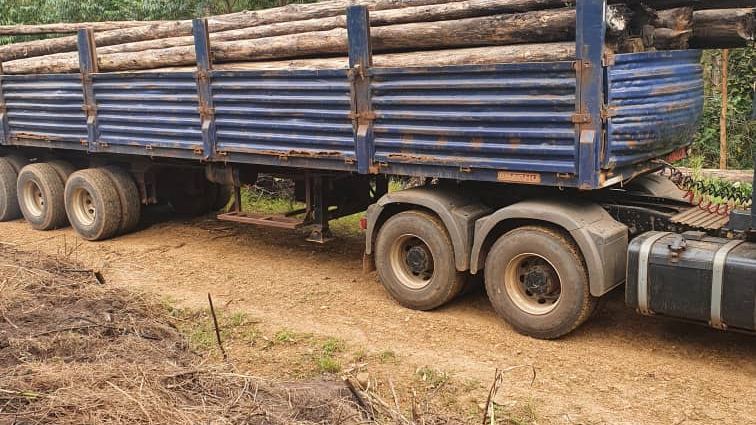
This guide is for sawmills, timber traders and other buyers who pay for pine before it is felled: what a block is worth to you, what to measure, which documents to see and what to put in the contract. We do not hold or list timber ourselves; use the guide whether you buy from growers directly or through our introductions.
Bid-Ceiling Calculator
Enter what the sawn timber will fetch, your recovery and your costs, and the calculator works back to the most you can pay for the standing trees, per cubic metre, for the block, and per hectare, acre and tree. The starting figures are round examples, not market prices, not a valuation and not an offer. The calculator itself does not share what you type. If you accepted analytics cookies, Microsoft Clarity records how the page is used; declining them keeps Clarity off.
Example result
How the result is built
Recovery table: the same sum at 25, 30, 35 and 40% recovery
| Recovery | Highest bid per m³ | Highest bid for the block |
|---|
Highest bid per m³ standing (UGX) by sawn value and recovery
What the calculator leaves out
- VAT and income tax. Work them out separately.
- The cost of money. If you borrow to buy, add the interest to your margin.
- Thinning obligations. If the sale makes you thin or leave some trees, cost the work and take out that volume.
- The price of land. The result is for the trees only. If you are buying the whole plantation, see lease or buy forestry land and forestry land prices.
- Volume uncertainty. Run it again with a pessimistic volume, such as the low end of the inventory’s stated error range.
- Site obligations. Clearing harvest waste, repairing roads and ditches, and any replanting or restoration the contract requires. Price them, or the grower will.
- Haulage in the wet season. The haulage field takes one figure per m³; get a quote for your actual route and season.
Do not bid at the ceiling. It is the price at which you just keep your margin if every input proves right. Open lower and keep the gap for what goes wrong; see where buyers get caught.
How the Sum Works
The calculator works per cubic metre of net sawlog volume (the standing volume left after defects), then multiplies up to the block. Example only: none of these numbers is a price.
| Step | Formula | Example |
|---|---|---|
| 1. Net volume | Area × volume per hectare × (1 − defect share) | 10 ha × 200 m³ × 85% = 1,700 m³ |
| 2. Revenue per m³ of log | Sawn value × recovery + by-product value | UGX 1,000,000 × 35% + 0 = UGX 350,000 |
| 3. Keep back margin and risk | Revenue × (1 − margin − risk) | 350,000 × (1 − 15% − 5%) = UGX 280,000 |
| 4. Direct costs per m³ | Felling + extraction + haulage + milling + levies | 20,000 + 25,000 + 30,000 + 60,000 + 10,000 = UGX 145,000 |
| 5. Access works per m³ | One-off access cost ÷ net volume | 2,000,000 ÷ 1,700 = UGX 1,176 |
| 6. Most you can pay per m³ standing | Step 3 − step 4 − step 5 | 280,000 − 145,000 − 1,176 = UGX 133,824, which the calculator shows as UGX 134,000 |
| 7. Most you can pay for the block | Step 6 × net volume | 133,824 × 1,700 = about UGX 227.5 million |
The calculator rounds its bids to the nearest UGX 1,000 per m³ or per tree, and UGX 100,000 per block, hectare or acre, because every input is an estimate. Margin and risk come off revenue first, so the sum protects them before it pays for anything else. If a mobile mill saws for you for a toll fee, enter the fee as the milling cost. If you will resell the logs unsawn, choose I resell the logs unsawn, which drops recovery and milling and works from what the logs will fetch.
Volume is the weak point of any bid. Without a measured inventory for the block, get one before you rely on the result; we measure blocks for buyers as part of timber buyer introductions. The growers are ones we work with, so you are free to have any inventory we produce for you checked by someone independent.
Recovery Is the Number to Argue About
Recovery is the share of each cubic metre of log that leaves the mill as sawn timber. An FAO and SPGS presentation with the Uganda Timber Growers Association in October 2019 counted about 5 board mills and 45 mobile mills in Uganda, put mobile-mill recovery at 25 to 40 percent, called that still very low, and said many mobile mills were not working at full capacity[2]. FAO’s 2020 investment model assumed 35%[1].
In the example, each point of recovery is worth UGX 8,000 per standing cubic metre, about the same as a 3% change in the sawn price, and the result runs from about UGX 54,000 at 25% to about UGX 174,000 at 40%. That is arithmetic on the example figures, not market data.
Until you have a test-saw result from this block, bid from the 25% row, the bottom of the range reported for mobile mills in 2019[2], and move up only on your own measured recovery. The 25–40% range describes mobile mills[2]; a mill with its own recovery records should use those. Get your own number:
- Test-saw logs from this block, at the mill that will cut them. Another stand’s result, or another mill’s, tells you little.
- Measure both ends. Record each log’s volume before sawing and the sawn output after it.
- Keep the results by diameter class. Small logs lose more to slabs and saw cuts, and sweep, forks and rot shorten usable lengths; see why diameter dominates.
The same presentation noted a 270% premium for boards wider than 8 inches[2]. Read that as a 2019 statement about price differences between board sizes, not a calculator input: enter the average value of the mix of sizes you will actually cut.
Standing, Roadside or Delivered: Which Price Is It?
Compare offers only on the same basis. Where the trees or logs are when ownership passes decides who pays for what, and who carries the risk of hidden defects.
| Price basis | Felling | Extraction to road | Haulage | Defect risk |
|---|---|---|---|---|
| Standing (stumpage) | Buyer | Buyer | Buyer | Buyer, unless the contract adjusts the price to measured volume |
| Felled at stump | Seller | Buyer | Buyer | Shared: the buyer sees the cut logs before taking them |
| Roadside | Seller | Seller | Buyer | Mostly the seller: the buyer can reject logs at the roadside |
| Delivered to the mill | Seller | Seller | Seller | Seller: the mill measures and grades at the gate |
These are the usual splits; the contract decides. The calculator works on a standing basis, so to test a roadside offer, set felling and extraction to zero and compare the result with the roadside price. On a standing basis the felling crew is yours to find; choosing a pine harvesting company covers what to check before you hire one. For the grower’s side of this choice, see tree buyers in Uganda.
Per Tree, Per Acre or Per Cubic Metre: Converting an Asking Price
A lump sum, a price per tree or a price per acre tells you nothing per cubic metre until you know the measured volume behind it, and two blocks at the same price per acre can carry very different volumes. Convert every asking price before you compare it with your own figure.
| To get the price | Divide the asking price by | Example: UGX 150 million for the example block |
|---|---|---|
| Per m³ | Net sawlog volume (1,700 m³) | UGX 88,235 |
| Per hectare | Area in hectares (10) | UGX 15,000,000 |
| Per acre | Area in acres (10 ÷ 0.404686 = 24.71) | UGX 6,070,290 |
| Per tree | Area × stems per hectare (10 × 300 = 3,000) | UGX 50,000 |
The UGX 150 million is invented to show the arithmetic. It is not taken from any real offer. Enter an asking price in the calculator’s last field and it sets these figures beside your result, with the recovery you would need to pay that price and keep your margin: 29.3% in the example, which your own test-saw would have to beat. One acre is 0.404686 hectares.
For contrast, InfoNile reported in August 2024 that some growers were selling a ten-year-old eucalyptus or pine tree for as little as Shs 20,000, and an acre of mature eucalyptus for as little as Shs 6 million, which it put at about Shs 30,000 a tree[7]. That is one news report, about trees around ten years old (young for pine sawlogs), at prices it linked to the export rules. It is not a price guide.
What to Cruise Before You Bid
Cruising means walking and measuring the block before you price it. A measured inventory is what turns an asking price into a number you can bid against. Record at least:
| What to record | Why a buyer cares | How |
|---|---|---|
| Age class and planting year | Stems need time to reach sawlog size; FAO puts pine at about 18 years to full maturity[1] | Planting and grant records, checked against the sizes you measure |
| Diameters by class, and the share above your minimum sawlog diameter | Recovery and log value follow diameter | Diameter at breast height (1.3 m) on every tree in systematic sample plots |
| Stocking and thinning history | Unthinned stands hold many thin stems that may never reach sawlog size | Stems per plot, thinning dates, old stumps |
| Defects: sweep, forks, rot, fire and pest damage | Defects shorten logs and cut recovery | Score each tree in the plots |
| Height and form | Usable height sets how many logs each stem gives | Height measured on a sub-sample of trees, with a clinometer or hypsometer |
| Access in the wet season | A lorry that cannot reach the block cannot load | Drive the route; check bridges, slopes and soils |
| Block boundary and area | You pay for what is inside the boundary | Walk it with GPS and compare with the seller’s map |
Plot layout and sampling are in how to run a forest inventory; turning diameter and height measurements into cubic metres is in how to calculate timber volume and the timber volume calculator; quotes in board feet are explained in board feet vs cubic metres. To have the block measured for you, we run inventories for buyers through timber buyer introductions.
Check That the Seller Can Sell
A good price for trees the seller has no right to sell is no bargain. Ask to see the documents that match the land:
| Situation | What to ask to see | Why |
|---|---|---|
| Trees on NFA licence land in a central forest reserve | The licence and its conditions, and NFA’s written position on the sale | NFA says land allocated for tree planting cannot be transferred, and that a licence holder may cancel the licence and pass the planted trees to another party only if that party agrees to the same conditions[4]. Section 40(3) of the Act says a licence over a forest reserve gives no right, title or interest beyond its own terms[3]. |
| Leasehold land | The lease, its remaining term and any clause on trees or assignment | Your harvest window must end before the lease does |
| Any other land | The title or other tenure document, and proof that the seller is entitled to the trees (for registered land, the registered owner or their written authority) | The person you pay must be the person entitled to the trees |
| Any plantation | Whether it is registered with the district land board, and its management plan | Section 21 of the Act lets an owner register a plantation forest with the district land board and says its produce must be harvested according to the management plan[3] |
Where the land is mailo or customary, has no certificate of title, or is occupied by someone other than the registered owner, we have not confirmed which documents show a right to sell the trees, so take legal advice before you pay.
This is general information, not legal advice. Use a Ugandan advocate for the title search and to read the licence or lease.
Papers to Ask to See Before Loading
Public information on marking and moving timber is thin. The most detailed public description we found is a 2012 WWF report on a 2004 Ministerial Public Notice[5]. Treat this table as questions to ask, not today’s rules.
| Paper or mark | What it shows | Source and date | Status |
|---|---|---|---|
| Harvesting licence or authorisation, with receipts for dues | Felling is licensed and dues are paid | 2004 notice, as described in 2012[5] | Not confirmed today |
| Forest produce declaration form | Issued once the produce is marked | 2004 notice, as described in 2012[5] | Not confirmed today |
| Hammer marks on logs and timber | Origin; unmarked, undocumented produce could be confiscated | 2004 notice, as described in 2012[5] | Not confirmed today |
| District seal and forest produce movement permit | Needed for timber leaving a district. Licence holders in central forest reserves needed no permit and paid a UGX 10,000 administration fee per load instead[5] | 2004 notice, as described in 2012[5] | Not confirmed today |
Practice varied in 2012: some District Forest Officers charged the 1 percent movement-permit fee and others did not, and many had stopped because the permit forms and receipt books had run out[5]. Timber from NFA’s own central forest reserves moved with only forest produce declaration forms[5]. NFA’s FAQ says a permit fee is charged for harvesting trees on private land, with no fee if the timber is for personal use, but does not state the amount[4]. We have not confirmed the current procedure, forms or fees from a published source. Ask the District Forest Officer where the trees stand, or NFA if they are in a central forest reserve, which documents they issue, what they cost, who pays and who applies, and write the answer into the contract. We work closely with the National Forestry Authority and can take this paperwork on for you.
Chainsaws. The 2004 notice, as described in 2012, classes chain-sawn timber as contraband, to be confiscated at the site with the saw and any vehicle carrying it[5]. NFA’s FAQ says a 2004 statutory instrument declared chainsaw use contraband and that only the Minister for Water and Environment can permit it[4]. We have not read the instrument or confirmed how it bears on felling and cross-cutting in a private plantation. Ask the District Forest Officer what your fellers and mill may use, and write it into the contract: your felling and milling costs, and the risk of losing the timber, depend on it.
Contract Terms That Protect a Buyer
A contract drafted by the seller protects the seller. Add these from the buyer’s side:
| Term | What to write in | Why it protects you |
|---|---|---|
| The block | A map and GPS polygon, with the boundary marked on the ground before felling | You buy only what is inside it |
| Price basis and volume check | A price per m³ against an agreed measurement point and method, or a lump sum with a minimum volume and a refund formula | The volume claim becomes a promise with a remedy |
| Title warranty and indemnity | The seller warrants the right to sell and indemnifies you if they cannot deliver | You recover your money if the title fails |
| Harvest window | Start and finish dates, and what happens if rain or a rule change stops work | A stoppage extends the window instead of ending your rights |
| Access and right of entry | The route, entry for crews and lorries, and who maintains the road | You can reach what you paid for |
| Staged payment | Payments tied to volume extracted; deposit refundable if title fails | You never pay far ahead of what you have removed |
| Documents | Which documents the seller supplies, and by when | Haulage does not stall for want of a permit |
| Rule changes | What happens if export or movement rules change before the timber moves | A pause, a price review or an exit with a refund, agreed in advance |
| Earlier contracts | Whether to register the contract. For a plantation registered with the district land board, the Act says a contract to harvest or buy its produce may be registered against the title, or as a separate folio where no title has been issued, and that the board keeps a register of rights and interests (sections 22 and 23)[3] | A search of that register can show an earlier contract on the same trees; take legal advice on whether to register yours |
| Dispute route | Who mediates, and where a claim is heard | Both sides know the route before a dispute starts |
Growers have their own list; read the seller’s twelve clauses so you know what they will ask for. This is not legal advice; have a lawyer review the contract before you sign.
Other Ways to Buy: NFA Coupes and Impounded Timber
Private growers are not the only sellers. As described in 2012, NFA divided the crop in its plantations into coupes under a harvesting plan, advertised the coupes and sold them under the public procurement (PPDA) guidelines, and issued licences to buyers after payment[5]. NFA’s FAQs say impounded timber can be bought at auction and that the law requires timber auctions to be run by registered auctioneers, and explain why NFA moves impounded timber to Kampala for auction[4]. Impounded timber is already cut, not standing. Confirm current practice with NFA before you plan around either route.
Export Rules and Price Risk
Export rules change what a log is worth to you, and the position is unclear. What is known:
- The resolution. On 29 June 2023 the Office of the Prime Minister reported that the National Policy Committee on Environment had resolved to ban the export of timber and cancelled all licences and permits issued for it. The same report quotes the Prime Minister as saying that export licences would stop and that those already issued would be cancelled for exporters “not adding value”[6]. InfoNile reported that the presidential directive behind it covered “unprocessed timber products”[7]. Both sources point to timber with no value added; whether sawn pine counts as adding value is the open question.
- Sawn timber. In August 2024 InfoNile quoted Busoga Forestry’s managing director saying plywood, woodchips, sawdust and pallets could be exported but sawn timber could not; the report also said the company’s sawmill was working at 40% capacity[7]. That is a news report of one company’s statement, not an official position on sawn timber.
- The Act. Section 43 of the National Forestry and Tree Planting Act (Cap. 160, consolidated text[3]) bars the export of timber without an export licence and allows a licence only for graded timber; section 44 allows a statutory order that prohibits or restricts the movement of forest produce[3]. A 2020 policy analysis gives the export rule as Article 44, the 2003 numbering[1].
- Prices and supply. FAO’s July 2020 paper found timber prices in Uganda 25–30% below Kenya’s because of export restrictions, and projected pine supply rising from about 200,000 m³ a year to 800,000 m³ by 2023 and more than 1 million m³ by 2026[1]. Those are projections; actual volumes since then are not verified.
Not confirmed: whether the ban is in force in 2026, whether it covers sawn timber, and whether it has been lifted or narrowed. Ask NFA before you sign anything that depends on an export sale, and if your plan relied on an export market, read the calculator’s stress grid at a lower sawn value rather than at an export price. The documents an export buyer will ask a grower for are covered in exporting timber from Uganda, including the EU deforestation rules.
Where Buyers Get Caught
- Volume short of the claim. Bid on measured volume, and put a minimum volume and a refund formula in the contract.
- A block older or younger than described. Check the planting records against the diameters you measure.
- Trees that are not the seller’s to sell. See the title, lease or licence before any money moves.
- Unthinned stands. Stems crowded for years may never reach sawlog diameter; count the share above your minimum.
- No wet-season access. Drive the route before you agree a harvest window.
- The same block offered to two buyers. Ask for a written exclusive period while you measure, ask the district land board whether an earlier contract is registered against the plantation, and pay nothing without a signed contract.
- Permits missing when the lorries arrive. Name each document and its date in the contract.
- Recovery lower than assumed. Test-saw logs from this block, at your mill.
- Rules changing after you sign. Agree in advance what happens to the price and the deposit.
If you are the grower reading this, the same sums show what a buyer can afford to pay for your trees; finding and vetting tree buyers covers the seller’s side.
Frequently Asked Questions
How do I work out what to pay for standing pine?
Work back from the sale. Take what the sawn timber will sell for, multiply by the recovery you will actually get, keep back your margin and a risk allowance, then subtract felling, extraction, haulage, milling, levies and access costs per cubic metre. What is left, multiplied by the measured net volume, is the most the block is worth to you.
The bid-ceiling calculator on this page does the sum. Open below the ceiling, not at it.
What sawn recovery should I assume?
Is pine in short supply in Uganda?
Public sources do not support that. FAO’s 2020 policy analysis projected pine supply rising to several times the level it said was already close to meeting domestic demand. That was a projection and later volumes are not verified; the figures are under export rules and price risk. Source 1 below.
What a buyer may find harder to get is a block with a measured inventory, clear title and all-weather access; we have not counted how many such blocks exist.
Can I export sawn pine from Uganda?
We cannot confirm that you can. A government policy committee resolved in 2023 to stop timber exports by those not adding value and to cancel their licences. A news report the following year quoted one timber company saying sawn timber could not leave the country; whether sawn pine counts as adding value is the open question. We have not confirmed the position today, so get a written answer from NFA before you sign a contract that relies on selling abroad. Sources 6 and 7 below.
Who can sell me standing pine?
The person entitled to the trees. That is usually the landowner, a leaseholder whose lease runs beyond the harvest, someone with the owner’s written authority, or an NFA licence holder within the licence conditions. Where the land is unregistered or occupied by someone other than the registered owner, ask a lawyer who is entitled to the trees before you pay. NFA says land allocated for tree planting cannot be transferred, so on reserve land you are buying trees, not land. Have a lawyer check the documents; this is general information, not legal advice. Sources 3 and 4 below.
Do you sell standing pine?
No. We hold no stock and list nothing for sale. We introduce buyers to plantation owners we work with, and we can also value a block, oversee the harvest and help with the transport paperwork; timber buyer introductions explains each job and how fees are set. Because we work with those growers, you are free to have any inventory we produce checked by someone independent.
Bid on Measured Volume
Tell us the species, log sizes, volume and timing you need. If we know a grower who fits, we introduce you, and we can measure and value the block before you commit. We hold no timber and list none for sale. See how timber buyer introductions work.
Written by the Euca Eco Consults team in Wakiso, Kampala. Figures from outside sources are cited below; the calculator’s starting figures are examples, not prices. Sources read 9 October 2026.
Related Articles
Sources
Each figure, law and date on this page links to one of these. Where a source is old, the page says so.
- FAO, Reducing export restrictions on timber to sustain commercial forestry investments in Uganda. Policy brief CB0418EN, July 2020. www.fao.org. Read 9 October 2026 (full text).
- L. Hitimana (FAO/SPGS) and D. Kavuma (Uganda Timber Growers Association), Sustainability of wood value chain in Uganda: bottlenecks and potentials. Presentation, SW4SW, Johannesburg, October 2019. www.fao.org. Read 9 October 2026 (slide text).
- Republic of Uganda, National Forestry and Tree Planting Act, Cap. 160, sections 21–23, 40, 43 and 44, consolidated text on UNEP LEAP, version at 31 December 2023. leap.unep.org. Read 9 October 2026.
- National Forestry Authority (NFA), Frequently asked questions (tree-planting licences; harvesting permit fees; chainsaws; impounded timber and auctions), undated web page. nfa.go.ug. Read 9 October 2026.
- WWF Uganda Country Office, with the European Commission, National Timber Trade and FLEGT Solutions for Uganda (Box 1 on the 2004 Ministerial Public Notice; district fees; NFA plantation sales), November 2012. awsassets.wwfdk.panda.org. Read 9 October 2026.
- Office of the Prime Minister, Uganda, Government bans timber export, orders for immediate suspension of clearing of Bugoma Forest, 29 June 2023. opm.go.ug. Read 9 October 2026.
- InfoNile, Museveni timber export ban bites: technocrats blame Chinese veneer processors, local tree growers blame the technocrats, 20 August 2024. infonile.org. Read 9 October 2026.