Ugandan Tree Names in Luganda: A Reference for Growers and Buyers
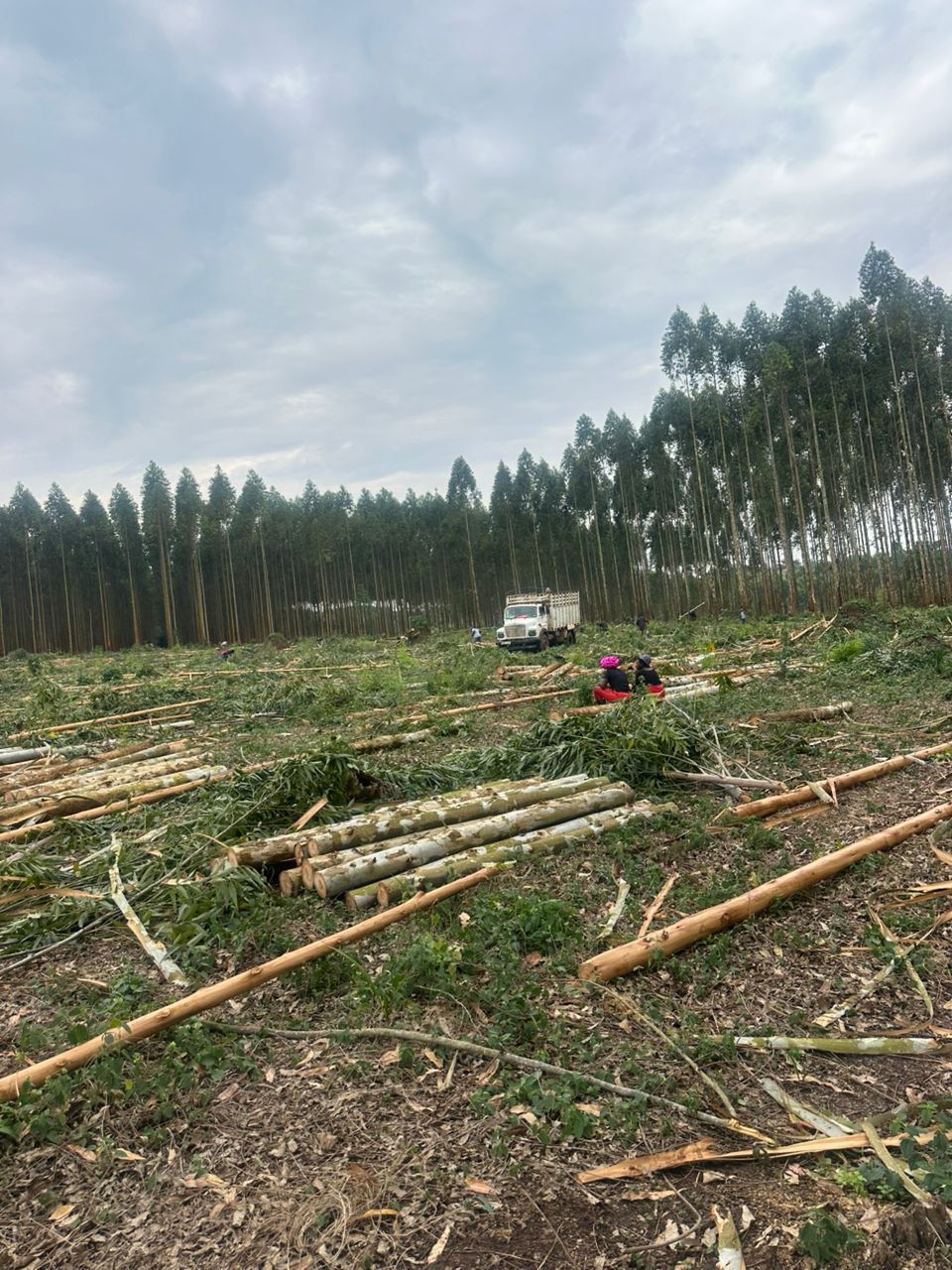
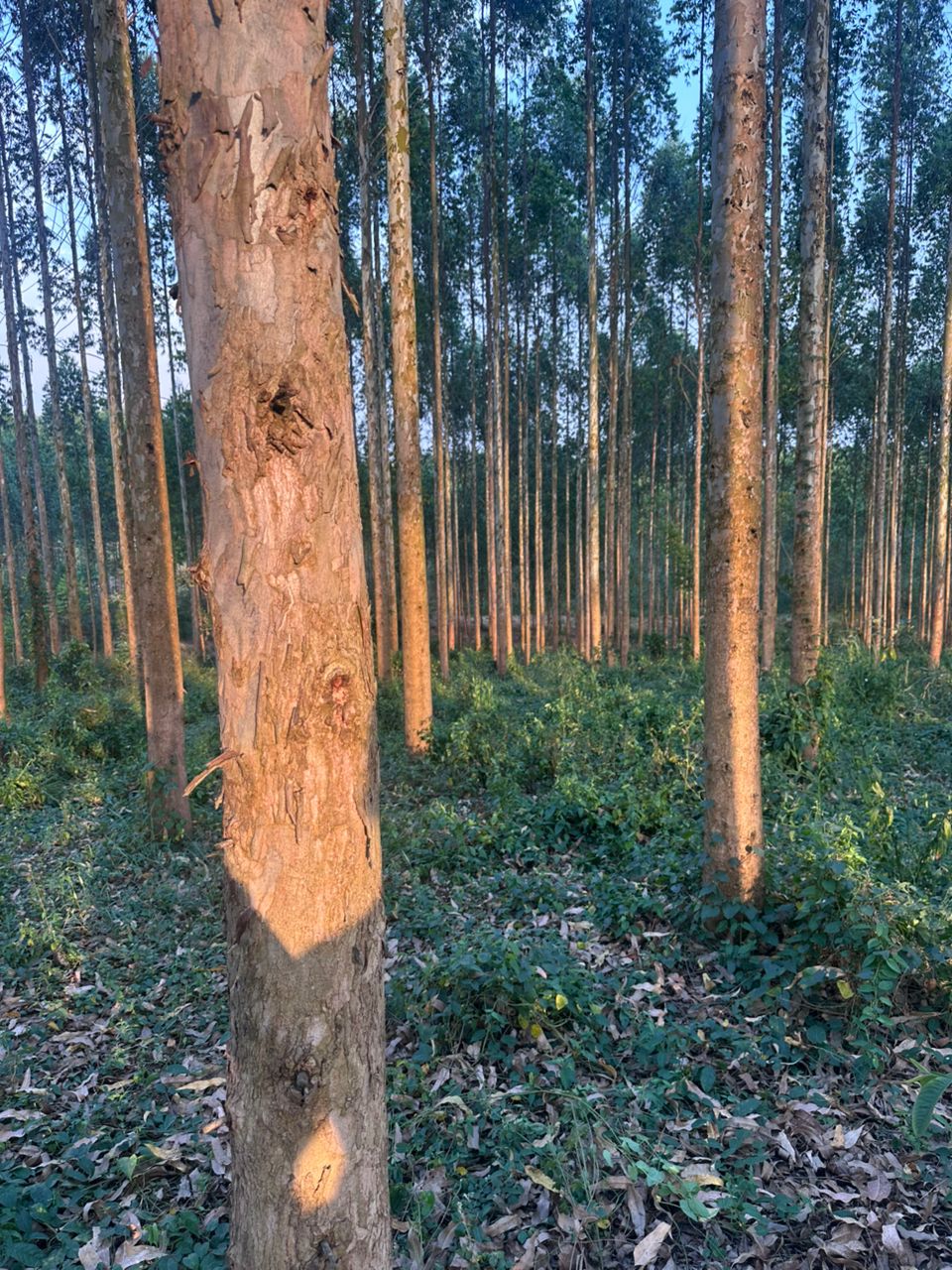
Eucalyptus is kalitunsi in Luganda (also written kalitusi or kalitoonsi). It covers every eucalyptus species — grandis, camaldulensis, clones, all of it.
Musizi is not a translation — it is the name. Musizi is Maesopsis eminii, an indigenous fast-growing timber tree, and the Luganda name is what it is traded under.
Teak has no traditional Luganda name. It is an introduced species and is simply called teak or tiiki.
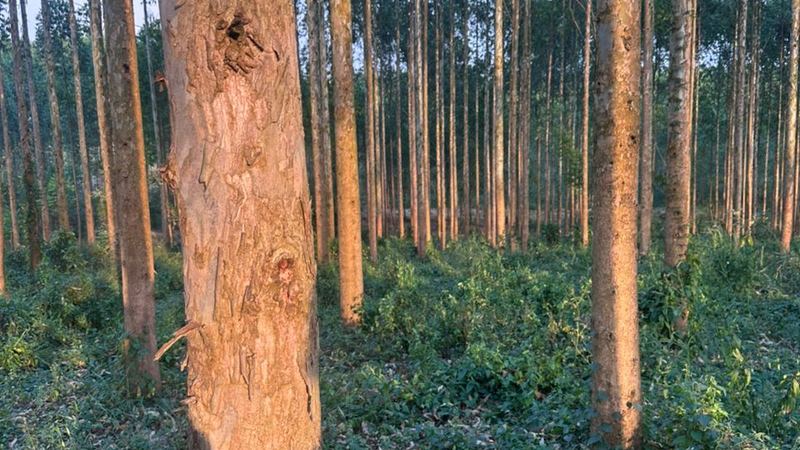
If you are buying seedlings upcountry, negotiating with a timber buyer, or asking a landowner what is growing on their plot, the Luganda name is often the only one in use. This is a working reference — not a botanical dictionary, but the names you will actually encounter in a forestry conversation in central Uganda.
The Quick Reference
| Luganda | Botanical name | English | Main use |
|---|---|---|---|
| Kalitunsi | Eucalyptus spp. | Eucalyptus, gum tree | Poles, timber, firewood, charcoal |
| Payini | Pinus spp. | Pine | Sawn timber, construction |
| Musizi | Maesopsis eminii | Umbrella tree, musizi | Timber, plywood, agroforestry shade |
| Muvule | Milicia excelsa | Iroko, African teak | High-value hardwood timber |
| Muyovu | Khaya anthotheca | African mahogany | Premium furniture timber |
| Nsambya / Lusambya | Markhamia lutea | Nile tulip | Poles, boundary planting, shade |
| Nongo | Albizia coriaria | Albizia | Shade, timber, medicinal, boundary |
| Mutuba | Ficus natalensis | Bark cloth fig | Bark cloth, shade for coffee and banana |
| Muwafu | Canarium schweinfurthii | African elemi, incense tree | Edible fruit, timber, shade |
| — | Tectona grandis | Teak | Premium timber; no traditional Luganda name |
Names vary — and local usage wins
- Tree names differ between regions, between clans, and sometimes between neighbouring villages.
- Where a name you know differs from the table above, the local usage is the correct one for that transaction. Botanical names exist precisely because common names are not stable.
- If you know a correction or an addition for this table, tell us — we update it.
Commercial Timber Species
Kalitunsi — eucalyptus
The dominant planted tree in central Uganda and the one most smallholders mean when they say they are "growing trees". Because the name covers all eucalyptus species and clones indiscriminately, a nursery selling "kalitunsi" could be selling anything — seedling-grown E. grandis, drought-tolerant E. camaldulensis, or a GU or GC clone at several times the price. Always ask which. Our species and clone guide covers the differences.
Payini — pine
A loanword, because pine is not indigenous to Uganda. Almost always Pinus caribaea at low and mid altitude, P. patula in the highlands. A fifteen-to-twenty year crop for sawn timber — see the pine plantation guide.
Musizi — Maesopsis eminii
The most commercially interesting indigenous species for growers who want something faster than mahogany but more valuable than eucalyptus. A light-demanding pioneer that grows quickly on good Lake Victoria crescent soils, used for plywood and light construction, and widely planted as shade in agroforestry systems. Full detail in our musizi growing guide.
Indigenous Species You Will Meet
- Muvule (Milicia excelsa) — the iroko, one of Uganda's most valuable indigenous hardwoods and culturally significant in Buganda. Very long rotation. Mature standing muvule on a plot is a material asset and should be valued before any land transaction.
- Muyovu (Khaya anthotheca) — African mahogany, premium furniture timber. Plantation establishment is constrained by shoot borer damage; see indigenous hardwoods.
- Nsambya (Markhamia lutea) — extremely common, quick, used for poles, boundary marking and shade. Not a high-value timber but a genuinely useful farm tree.
- Nongo (Albizia coriaria) — a nitrogen-fixing shade tree widely retained on farmland and used medicinally.
- Mutuba (Ficus natalensis) — the bark cloth fig, of deep cultural importance in Buganda and a traditional shade tree in coffee and banana gardens.
- Muwafu (Canarium schweinfurthii) — grown for its edible fruit as much as its timber; a familiar homestead tree.
Mature indigenous trees on a plot are an asset. We value them properly.
Fruit and Homestead Trees
| Luganda | English | Note |
|---|---|---|
| Ffene | Jackfruit | Very common homestead tree; the timber is also used |
| Muyembe | Mango | Fruit and shade; boundary planting |
| Mupeera | Guava | Fruit; small hard timber used for tool handles |
| Mukomamawanga | Pawpaw / papaya | Short-lived; fruit only |
These matter more than they look in a forestry conversation. When a landowner describes a plot as "planted", they may well mean fruit trees and scattered indigenous shade rather than a timber crop — and that changes the valuation completely.
Why the Name Matters Commercially
- One local name, many species. "Kalitunsi" spans a fourfold price range at the nursery. Buying by local name alone is how people pay clone prices for seedling stock.
- Valuation depends on identification. A plot with mature muvule or muyovu on it is worth materially more than one with the same volume of eucalyptus. Buyers who can identify species and sellers who cannot is a common and expensive asymmetry.
- Regulation follows species. Some indigenous species carry specific protections and harvesting restrictions. Felling first and asking afterwards is a poor sequence.
- Timber buyers grade by species. Being able to describe accurately what you have, in both the local and botanical name, changes the conversation.
Regional Variation
Luganda is the working language of central Uganda, but a plot in Gulu will be discussed in Acholi, one in Mbarara in Runyankole, one in Arua in Lugbara. Kalitunsi and its close variants travel surprisingly well — eucalyptus arrived as a named introduction and the name largely came with it — but indigenous species names diverge sharply between languages.
The practical rule when working outside your own language area: agree the botanical name, or point at the tree. Both parties assuming they mean the same species, in a transaction involving money, is a recipe for a dispute nobody wins.
Frequently Asked Questions
What is eucalyptus called in Luganda?
Eucalyptus is kalitunsi in Luganda, also written kalitusi or kalitoonsi.
The name covers all eucalyptus species and clones without distinction, so a nursery selling "kalitunsi" could be selling E. grandis, E. camaldulensis or a GU or GC clone at several times the price. Always ask which.
What is teak called in Luganda?
Teak (Tectona grandis) has no traditional Luganda name because it is an introduced species. It is generally called teak or tiiki.
Note that muvule (Milicia excelsa) is sometimes marketed in English as "African teak", which causes real confusion. They are entirely different trees with different values.
What is musizi in English?
Musizi is Maesopsis eminii, sometimes called the umbrella tree in English — but in Uganda the Luganda name is the trade name and is used in English conversation too.
It is an indigenous fast-growing timber species used for plywood and light construction, and widely planted as agroforestry shade.
What is muvule?
Muvule is Milicia excelsa, known internationally as iroko. It is one of Uganda's most valuable indigenous hardwoods and holds significant cultural importance in Buganda.
It is a very long-rotation species. Mature standing muvule on a plot represents real value and should be identified and valued before any land transaction.
Why do tree names differ from one place to another in Uganda?
Uganda has many languages, and tree names are language-specific rather than national. The same species is kalitunsi in Luganda and something else in Acholi, Runyankole or Lugbara — and names can vary even between neighbouring villages within one language area.
This is exactly why botanical names exist. When money is involved and you are working outside your own language area, agree the botanical name or point at the tree.
Buying Trees Locally?
Local names cover many species. If you are paying for a particular one, we will confirm what you are actually being sold before the money moves.
Over a decade establishing, measuring and managing eucalyptus, pine and indigenous plantations across Uganda. Based in Wakiso, Kampala. Reviewed and updated August 13, 2026.