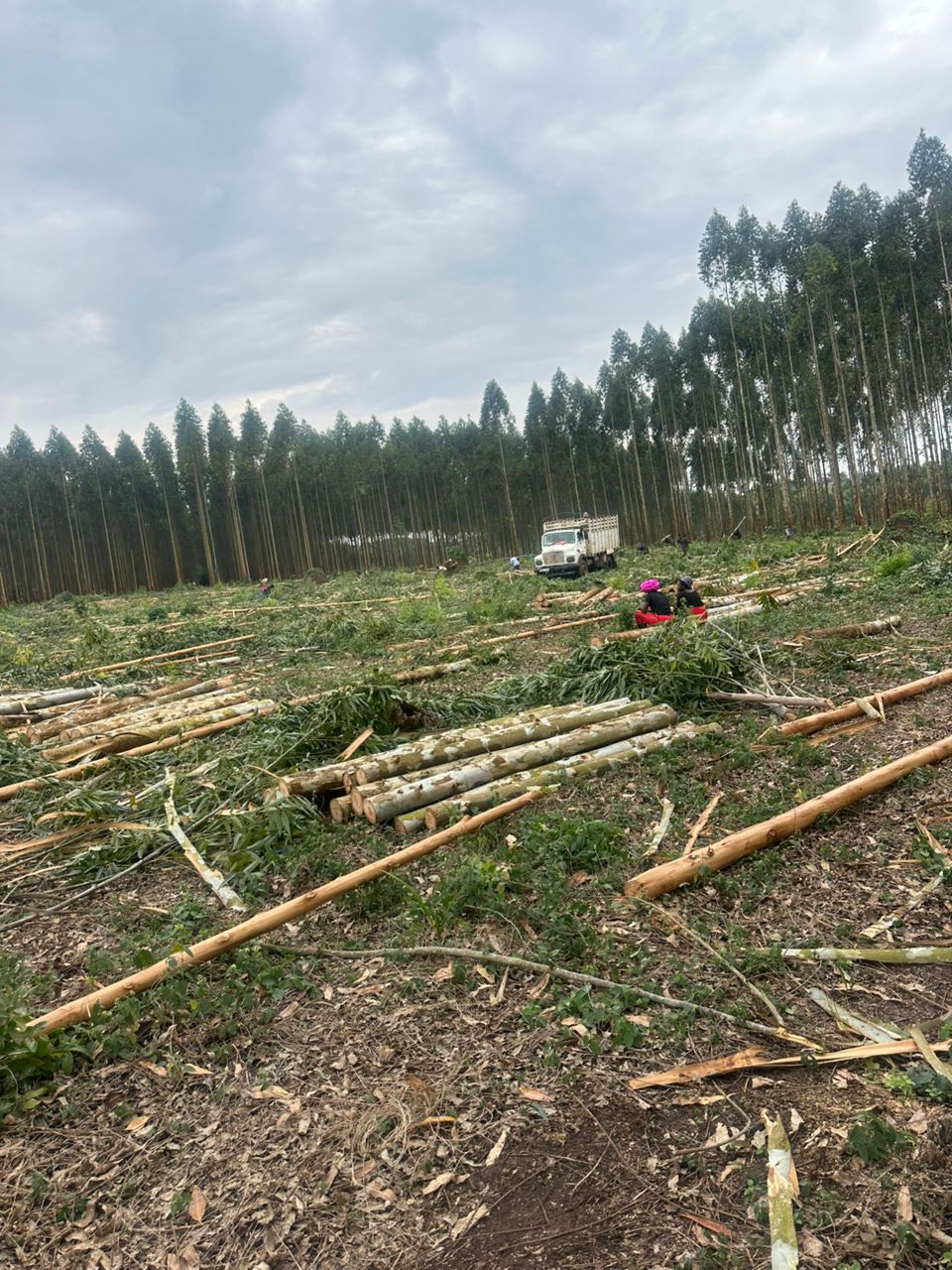
Is My Ugandan Plantation Eligible for Carbon Credits?
Probably not on its own, and that is the answer most growers need to hear before spending money on a feasibility study.
Forestry carbon projects carry substantial fixed costs — project design, validation, monitoring, verification, registry fees — that do not scale down. A plantation of a few hundred hectares rarely generates enough credits to cover them.
What can work is aggregation: many growers pooled into a single grouped project under one project developer, sharing the fixed costs. If someone is offering you a standalone carbon project on a small block, ask them very carefully about the economics.
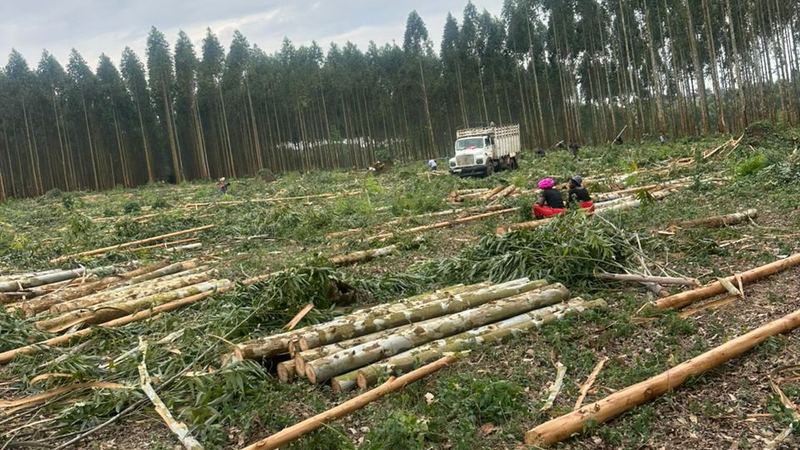
Carbon comes up in almost every forestry conversation in Uganda now, and the gap between what growers are told and what is achievable is wide. This guide is the screen we run before anyone pays for a feasibility study.
The Six Eligibility Tests
Every credible standard — Verra's VCS, Gold Standard, Plan Vivo and the rest — asks versions of the same six questions. Fail any one and the project does not proceed.
1. Land eligibility
Afforestation and reforestation methodologies require the land to have been non-forest for a defined period before the project started. You are being paid for carbon that would not otherwise exist, so land that was already forest does not qualify.
This is proven with historical satellite imagery, not with testimony. It is also where projects most often fail at validation. Our land-cover change detection service reconstructs this history — and it is worth doing before committing to a project, not during validation.
2. Additionality
You must show the planting would not have happened anyway. If the block is commercially profitable on timber alone — which a well-sited Ugandan eucalyptus plantation usually is — demonstrating additionality is genuinely difficult.
This is the most uncomfortable test for commercial forestry and the one that most often disqualifies otherwise attractive projects. It also means the argument "carbon will improve my plantation's returns" contains a contradiction: if the timber returns already justify it, the carbon may not be additional.
3. Permanence
Carbon must stay stored. Standards require long crediting and monitoring periods — often decades — plus buffer pools to insure against reversal from fire, disease or harvest.
This sits awkwardly with short-rotation eucalyptus. A crop harvested at year seven releases much of its carbon. Long-rotation timber, restoration planting and agroforestry are generally a better fit than pole plantations.
4. Carbon rights and tenure
You must be able to demonstrate who owns the carbon, which is not automatically the same as who owns the land or the trees. On customary land, on land with overlapping interests, or where a project spans many owners, this needs resolving properly and in writing before anything else.
Buyers and validators scrutinise this closely, and rightly — unresolved carbon rights are behind many of the disputes that have damaged the sector's reputation.
5. Leakage
If your project simply displaces an activity elsewhere — grazing pushed onto neighbouring land, fuelwood cutting moved to a nearby forest — that displaced emission is deducted from your credits. Projects that exclude existing land users without providing alternatives generate leakage and social problems.
6. Measurable, monitorable, verifiable
You need a defensible baseline, a monitoring plan, permanent sample plots, and periodic third-party verification. This is real, recurring, technical work — not paperwork you complete once.
The Scale Problem
Why small standalone projects do not work
- Fixed costs dominate. Project design documents, validation, registration and verification cost broadly the same whether the project is 200 hectares or 20,000.
- Credits scale with area; costs largely do not. Below a certain size the arithmetic simply does not close.
- Verification recurs. It is not a one-off cost — you pay for it periodically across the crediting period.
- Prices vary enormously by credit type, vintage, standard and buyer, and the voluntary market has been volatile. Do not build a model on a single quoted price.
We are deliberately not publishing threshold hectares or a price per tonne. Both move, both depend heavily on methodology and market, and a number in a blog post is exactly how growers end up with unrealistic expectations. What is stable is the structure: fixed costs, recurring verification, credits proportional to area.
One honest call beats a paid feasibility study that confirms you are too small.
Aggregation and Grouped Projects
This is the realistic route for almost every Ugandan grower, and it is how smallholder forestry carbon works elsewhere.
- A project developer establishes a grouped project under a standard that permits it, with a methodology and monitoring framework covering many participants.
- Individual growers join as participants, adding their area to the project without each bearing full validation costs.
- Fixed costs are shared across the pool, which is what makes the arithmetic work.
- The developer takes a share of credit revenue — that is the deal, and it should be transparent.
What to check before joining one: the developer's track record and whether they have actually delivered issued credits before; the revenue split and when you get paid; how long you are committed and what happens if you want to harvest; who bears verification costs; what happens if the project underperforms; and what obligations bind your land after the agreement ends.
Read that last one carefully. Some agreements restrict land use for decades. That is not automatically bad — permanence requires it — but you must understand it before signing, not afterwards.
What a Carbon Project Actually Costs
| Cost | When | Notes |
|---|---|---|
| Feasibility screen | Before anything | Cheap and the best money in the process. Often ends the conversation, usefully |
| Land-cover history / baseline | Early | Satellite reconstruction. Do this before commitment |
| Project design document | Development | Substantial technical work |
| Validation | Before registration | Independent third party. A fixed cost regardless of size |
| Registration & registry fees | At registration | Standard-dependent |
| Monitoring | Ongoing | Permanent plots, measurement, reporting — real recurring work |
| Verification | Periodic | Recurring, not one-off. The cost most often forgotten |
| Buffer pool contribution | At issuance | A share of credits withheld as reversal insurance |
How Long It Takes
Growers routinely expect carbon revenue within a year. Realistically, from first conversation to first credit revenue is a multi-year process: feasibility and land-eligibility work, project design, validation, registration, then a monitoring period before the first verification and issuance. Trees also have to grow before there is sequestration to credit.
Treat carbon as a long-horizon supplement to a project that already makes sense on its own terms. It is not a rescue for weak plantation economics, and any proposal presented that way deserves scepticism.
Red Flags in Carbon Offers
- A guaranteed price per tonne. Nobody can guarantee a voluntary market price years ahead.
- Vagueness about land eligibility. If they have not looked at historical imagery, they have not done the first test.
- Silence on additionality. The hardest test, and a serious proposal addresses it directly.
- Pressure to sign quickly. These are multi-decade agreements over your land.
- No named standard or methodology. "We will register it" is not an answer — under what, and using which methodology?
- Unclear revenue split or payment timing.
- No track record of issued credits. Many developers have projects; fewer have delivered issuance.
- Restrictions on your land buried in the schedules. Read them. Get them explained.
Is It Worth It?
Our honest position, from screening a lot of these:
- For a smallholder or a few hundred hectares of commercial eucalyptus: a standalone project almost certainly does not work. Aggregation may. The timber is the business.
- For large restoration, long-rotation or agroforestry projects with secure tenure and genuinely marginal land: worth a proper feasibility study.
- For anyone whose plantation is already commercially viable: additionality is the obstacle, and it is a real one.
- For everyone: the land-cover history and tenure work is worth doing regardless. It supports carbon eligibility, ESG and deforestation-free claims, lender due diligence and your own valuation — see ESG consultancy.
We will run an eligibility screen on a call for free and tell you plainly if the answer is no. That is usually more valuable than a paid study that reaches the same conclusion three months later. See also our overview of carbon credits from forestry in Uganda.
Frequently Asked Questions
Can I get carbon credits for my plantation in Uganda?
Possibly, but rarely as a standalone project. Forestry carbon projects carry substantial fixed costs — design, validation, registration, recurring verification — that do not scale down, so a small plantation rarely generates enough credits to cover them.
The realistic route for most Ugandan growers is joining an aggregated or grouped project where those fixed costs are shared across many participants.
What makes land eligible for a forestry carbon project?
Afforestation and reforestation methodologies require the land to have been non-forest for a defined period before the project started — you are being credited for carbon that would not otherwise exist.
This is proven with historical satellite imagery rather than testimony, and it is where projects most often fail at validation. Reconstruct the land-cover history before committing, not during validation.
What is additionality and why does it matter?
Additionality means showing the planting would not have happened without carbon finance. If your block is already commercially profitable on timber alone — which a well-sited Ugandan eucalyptus plantation usually is — demonstrating additionality is genuinely difficult.
It is the most uncomfortable test for commercial forestry. There is a contradiction in the pitch that carbon will improve your plantation's returns: if timber returns already justify the project, the carbon may not be additional.
Can I still harvest my trees if I join a carbon project?
It depends entirely on the agreement, and this is one of the most important things to establish before signing. Carbon standards require permanence — the carbon must stay stored — which sits awkwardly with short-rotation eucalyptus harvested at year seven.
Some agreements restrict land use for decades. That is not automatically unreasonable, since permanence requires it, but you must understand exactly what you are committing your land to.
How much can I earn from forestry carbon credits?
We deliberately do not publish a figure. Prices vary enormously by credit type, vintage, standard and buyer, the voluntary market has been volatile, and a number in an article is exactly how growers end up with expectations that cannot be met.
What is stable is the structure: substantial fixed costs, recurring verification, credits proportional to area, and a buffer pool that withholds a share of issuance. Model it with real quotes, not with a headline price per tonne.
How long before a carbon project pays anything?
Realistically a multi-year process — feasibility and land-eligibility work, project design, validation, registration, then a monitoring period before first verification and issuance. The trees also have to grow before there is sequestration to credit.
Treat carbon as a long-horizon supplement to a project that already makes sense on its own terms, never as a rescue for weak plantation economics.
Someone offered me a carbon deal with a guaranteed price. Should I take it?
Be very careful. Nobody can guarantee a voluntary carbon market price years ahead, and a guaranteed price is one of the clearest warning signs in this sector.
Other red flags: vagueness about land eligibility, silence on additionality, no named standard or methodology, no track record of actually issued credits, pressure to sign quickly, and land-use restrictions buried in the schedules. Have any such agreement reviewed before signing.
Want an Honest Eligibility Screen?
Most plantations that ask are too small to run a standalone project. We will tell you that in one call rather than after a paid feasibility study.
Over a decade establishing, measuring and managing eucalyptus, pine and indigenous plantations across Uganda. Based in Wakiso, Kampala. Reviewed and updated August 13, 2026.