12 Mistakes That Kill Ugandan Plantations
Not weeding in year one. It is not glamorous, it is not technical, and it accounts for more disappointing Ugandan plantations than every other cause combined.
Grass competition in the first twelve months costs growth you never recover. Two years later the owner blames the species, the seedlings, or the rain — and buys a different clone next time, which does not help either.
The Twelve, Ranked by Cost
| # | Mistake | What it actually costs | Recoverable? |
|---|---|---|---|
| 1 | No year-one weeding | Permanent growth loss; stems that never reach pole grade | No |
| 2 | Planting into dry soil | Mass mortality in the first weeks | Only by replanting |
| 3 | Planting too tight | Dense thicket of thin stems; charcoal market only | Partly — by thinning, if caught early |
| 4 | Wrong site for the species | Slow growth for the whole rotation | No — species choice is fixed at planting |
| 5 | No firebreaks | Total loss in one afternoon | No |
| 6 | Pot-bound seedlings planted anyway | Unstable, stunted trees for life | No |
| 7 | Never beating up | Permanent gaps; awkward harvest | Only in the first weeks |
| 8 | Skipping the thinning (pine, teak) | Uniformly thin stems, no sawlogs at year 15 | Partly, if not too late |
| 9 | Planting valley bottoms | Poor growth plus a regulatory problem | No |
| 10 | Selling unmeasured | A third of the value, at the last moment | Yes — fully |
| 11 | Destroying the coppice at harvest | Loses a free second rotation | Only before felling |
| 12 | Unresolved tenure | Everything, at the worst moment | Before planting only |
Read the Right-Hand Column
Almost none of these are recoverable
- Nine of the twelve are decided in year zero and year one, and cannot be fixed later at any price.
- Only number 10 — selling unmeasured — is fully recoverable, and it is the cheapest to fix. Measure the stand before you market it.
- Which means: the return on getting establishment right is enormous, and the window is short.
- If your budget is tight, spend it on weeding and firebreaks, not on premium clones. Good seedling stock properly weeded beats clonal stock neglected, every time.
Block underperforming? We diagnose it and tell you honestly what can be saved.
A 20-Minute Self-Audit
Walk your block and answer these. Anything you cannot answer is worth investigating.
- Count survival in three spots. Ten trees along a row, three times. Below 80% and something went wrong — find out what before you replant.
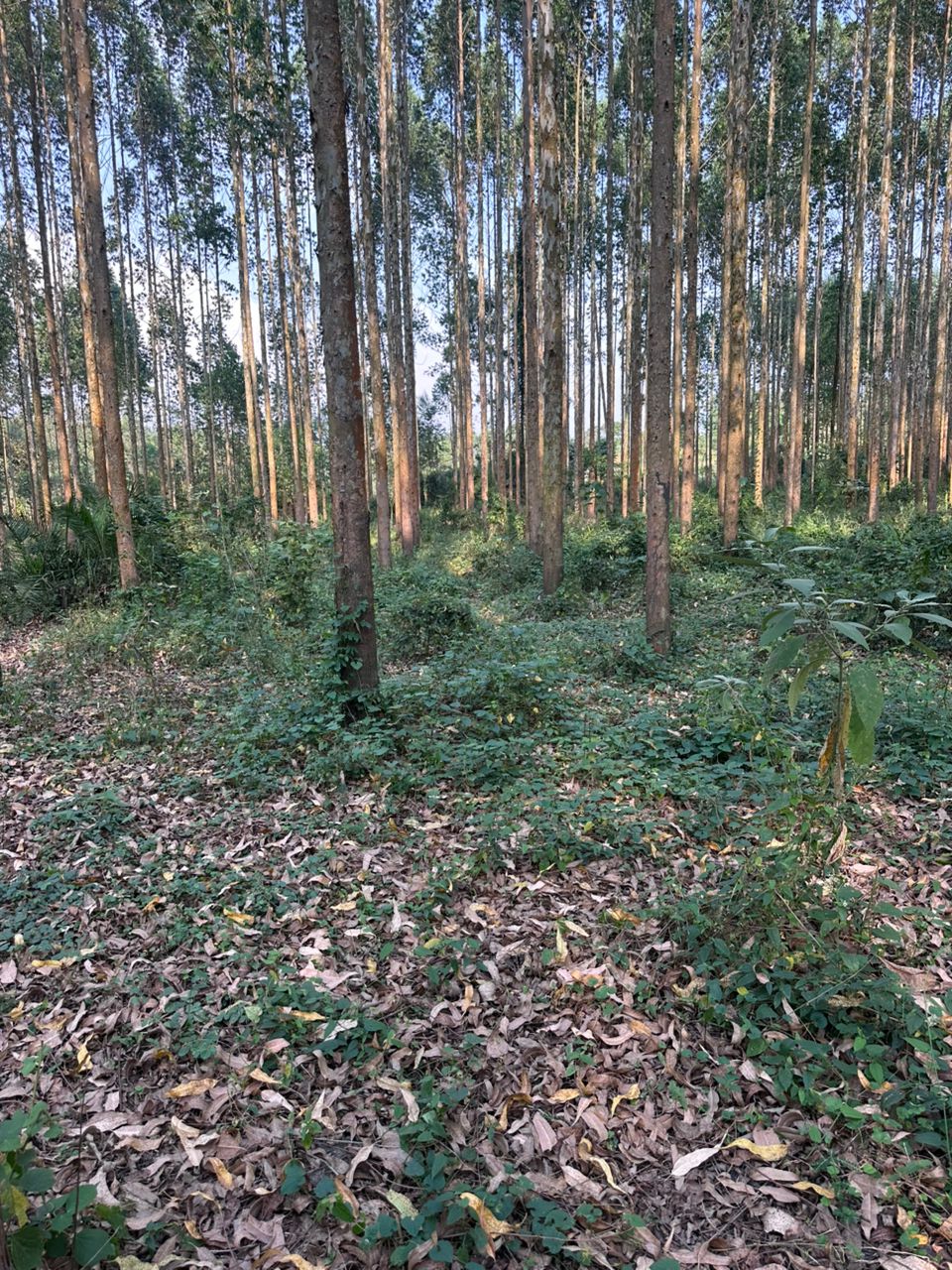
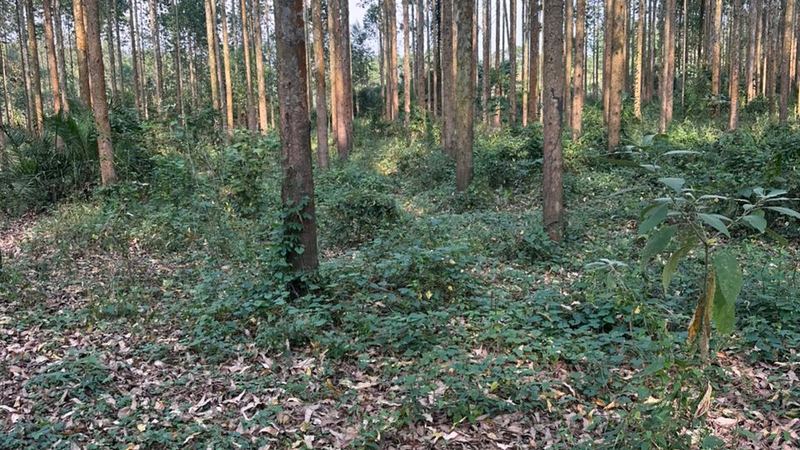
- Look at the ground under the trees. Grass to the collar in year one is your problem, right there.
- Check stem straightness. Sweep and forking mean spacing, pest damage, or lost leaders from gall wasp.
- Dig at the collar of a wilting tree. Cut or ring-barked at ground level means termites, not disease.
- Measure the gap between rows and compare with what you thought you planted. People are frequently surprised.
- Walk the firebreak. If you cannot find it, you do not have one.
- Look at the valley bottom. If trees there are yellow and stunted, that ground was never plantable.
- Check a leaf midrib for galls. Rows of small swellings mean gall wasp.
If several of these come back badly, the honest question is whether to rescue or restart — covered in rescue or replant.
Frequently Asked Questions
Why are my trees not growing in Uganda?
In order of likelihood: no weeding in the first year, planted into dry soil, planted too tight, wrong species for the site, or termite damage at the collar.
Walk the block and count survival in three places, look at grass competition, and dig at the collar of a wilting tree. That usually identifies it in twenty minutes.
Can I fix a plantation that was planted too close together?
Partly, and only if you catch it early. Thinning removes the poorest stems so the rest can put on diameter — but you cannot recover the growth already lost to competition.
By year twelve to fifteen in an unthinned stand, the stems are permanently suppressed and the realistic conversation is about salvaging value rather than reaching pole or sawlog grade.
What is the cheapest mistake to fix?
Selling unmeasured. It is fully recoverable right up until you sign, and fixing it costs the price of an inventory — which growers routinely recover several times over in the improved offer.
Almost every other mistake on the list is decided in year zero or year one and cannot be fixed at any price.
My plantation burned. Can it recover?
Eucalyptus often coppices back from the stump after fire if the root system survived, so a burnt young eucalyptus block is not always a total loss. Pine does not coppice and a burnt pine block usually is.
Assess before clearing. And put firebreak maintenance into the annual budget — it is the cheapest insurance in forestry.
Should I replant with a better clone next time?
Usually that is the wrong lesson. Growers whose block disappointed tend to blame genetics and buy a premium clone, then repeat the management that caused the problem.
Good seedling stock properly weeded beats clonal stock neglected, consistently. Fix the management first.
Find Out What Actually Went Wrong
Most underperforming blocks have one identifiable cause. We diagnose it on site and tell you plainly whether it is worth rescuing.
Over a decade establishing, measuring and managing eucalyptus, pine and indigenous plantations across Uganda. Based in Wakiso, Kampala. Reviewed and updated September 6, 2026.