Conservation Through Forestry: How Planted Trees Protect Wild Ones
People need wood. If they cannot get it from planted sources, they take it from natural forest and woodland. A hectare of fast-growing plantation can supply what several hectares of natural woodland would otherwise be cut to provide.
That is the substitution argument, and it is genuine — but it holds only under specific conditions. Plantation forestry is not automatically conservation, and claiming it always is has damaged the credibility of the people who say it.
The Substitution Argument
The logic runs: demand for fuelwood, charcoal, poles and timber is largely inelastic — people will cook and build regardless. The question is only where the wood comes from.
- A well-managed plantation produces far more wood per hectare per year than natural woodland regenerating under harvesting pressure.
- Producing that wood on a small planted area takes pressure off a much larger natural area.
- Planted wood can be grown close to where it is consumed, which also reduces incentives to reach deeper into intact forest.
This is why plantation development features in the forest policy of most countries with high fuelwood demand, and why it is not simply industry self-justification.
When It Actually Holds
Four conditions, all of which must be true
- 1. The plantation is on already-converted land. Grassland, degraded farmland, exhausted ground. If natural vegetation was cleared to plant it, there is no conservation gain — there is a loss dressed as one.
- 2. It genuinely supplies the same market. Fuelwood plantations relieve fuelwood pressure. A sawlog plantation does not relieve charcoal pressure; they are different products and different buyers.
- 3. It is close enough to matter. Wood is heavy and low-value per tonne. A plantation too far from the demand centre does not substitute for anything.
- 4. It does not displace the pressure. If planting removes land people were farming, and they clear woodland elsewhere to farm instead, the net effect is negative. This is leakage, and it is real.
When It Does Not
- Natural vegetation was cleared for the plantation. The most straightforward failure, and unfortunately not rare.
- The plantation is in the wrong place hydrologically — a wetland, a riparian strip, a catchment headwater. Fast-growing species there cause genuine harm regardless of the timber argument.
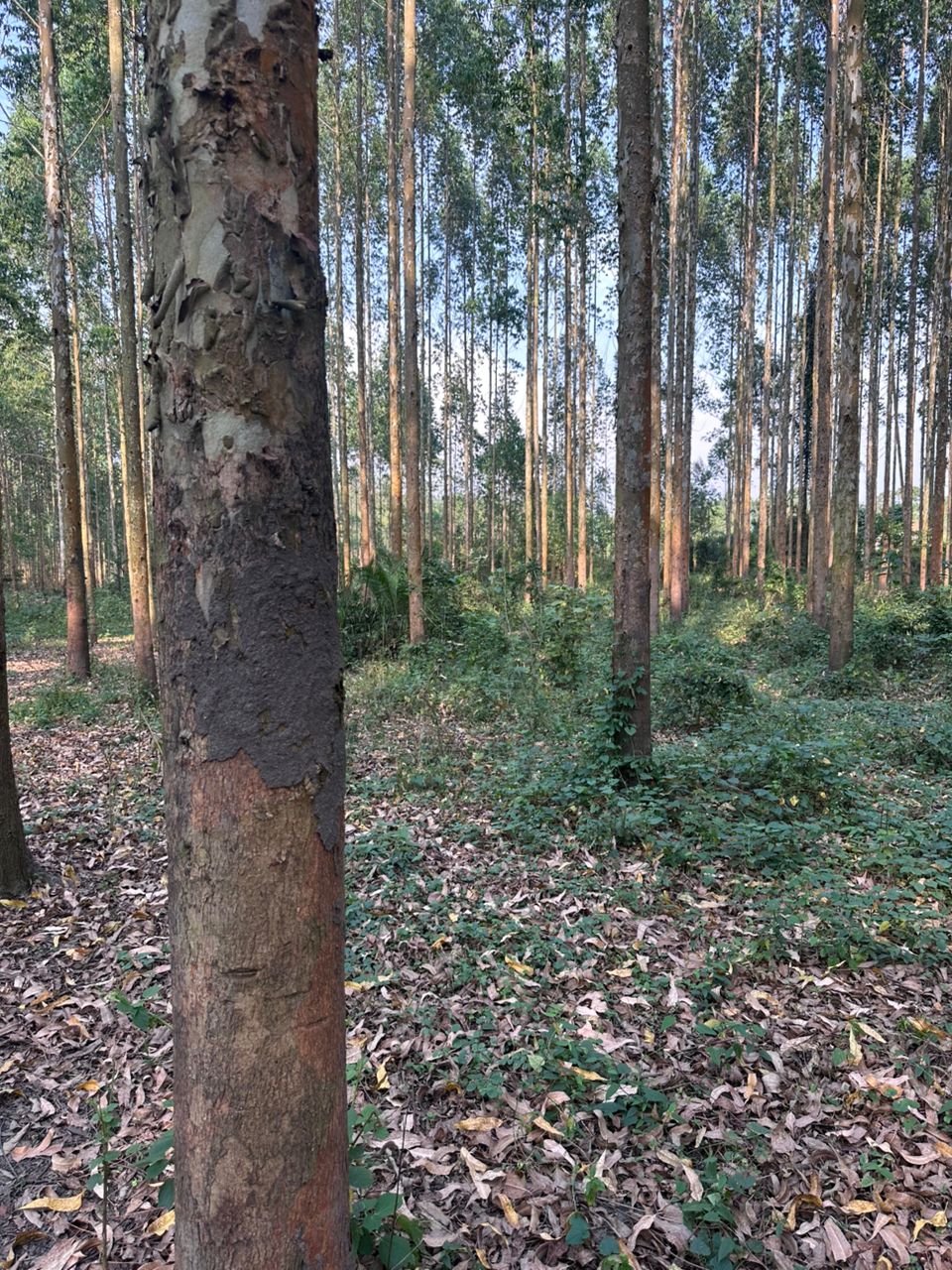
- Monoculture presented as habitat. A eucalyptus block is a crop. It has real conservation value as a substitute source of wood, and very limited value as habitat. Conflating the two is what makes ecologists distrust the argument.
- The claim is made without the evidence. If nobody measured what the land was before, or whether pressure on natural forest actually fell, the claim is untested.
Planning a plantation with a conservation rationale? We test whether it holds.
What to Look For
| Question | What good evidence looks like |
|---|---|
| What was the land before? | Satellite land-cover history, not testimony |
| Does it supply the same market? | Product and buyer identified, not assumed |
| Has pressure on natural forest fallen? | Monitoring of the natural area, not inference |
| Has the pressure moved elsewhere? | Leakage explicitly assessed |
| Are hydrological limits respected? | Mapped buffers, confirmed setbacks |
| Do local people benefit? | Defined benefit, not consultation minutes |
What This Means in Practice
The strongest conservation-through-forestry designs we see share a shape:
- Production blocks on already-degraded land, close to the demand they serve.
- Protected natural areas — riparian strips, remnant woodland, steep ground — explicitly excluded from planting and actively defended.
- A productive transition zone between the two, usually agroforestry, so people gain from the boundary rather than losing to it.
- Measurement of both — the plantation's yield and the natural area's condition.
That combination is a genuine conservation intervention. A plantation on its own, with a claim attached, is not.
Frequently Asked Questions
Are tree plantations good for conservation?
They can be, through substitution: wood people take from a plantation is wood they do not take from natural forest. But that holds only if the plantation is on already-converted land, supplies the same market, is close enough to matter, and does not push the pressure elsewhere.
A plantation established by clearing natural vegetation is not conservation, whatever is claimed for it.
Is a eucalyptus plantation a forest?
Ecologically, no — it is a crop. It has real value as a substitute source of wood and very limited value as habitat.
Conflating the two is what makes conservation professionals distrust the forestry industry's claims. Be precise: plantations relieve pressure on forests; they do not replace them.
What is leakage in conservation terms?
When protecting or converting one area simply moves the pressure somewhere else. If planting removes land people were farming and they clear woodland elsewhere to farm instead, the net effect can be zero or negative.
Serious projects assess leakage explicitly rather than assuming it away.
How can I tell if a conservation claim about a plantation is credible?
Ask what the land was before, evidenced by satellite land-cover history rather than testimony; whether the plantation supplies the same product and market as the pressure it claims to relieve; whether the natural area's condition is being monitored; and whether leakage was assessed.
If the answer to any of those is an assumption, the claim is untested.
Should conservation projects plant native species only?
It depends on the objective. For habitat restoration, native species, because the point is ecological function. For substitution — producing wood so natural forest is not cut — fast-growing exotics often do that job far better.
A well-designed programme frequently does both, in different zones, for different reasons.
Does the Conservation Argument Hold Here?
Four conditions decide it, and land-cover history answers the most important one. We check before you make the claim.
Over a decade establishing, measuring and managing eucalyptus, pine and indigenous plantations across Uganda. Based in Wakiso, Kampala. Reviewed and updated September 6, 2026.
Keep going
These apply the same way in any country.